

 0902 353 527
  cskh@nhahangvouy.com

How to Make Vegetarian Stir-Fried Glass Noodles at Home Without Sticking
Vegetarian stir-fried glass noodles are an easy dish made with mung bean glass noodles, vegetables, mushrooms and tofu. The key to a delicious result is soaking the noodles until just soft, draining them thoroughly and stir-frying them quickly in a hot pan. The finished dish has springy, separated noodles, tender-crisp vegetables and flavourful toppings, making it suitable for breakfast, lunch or vegetarian days.
- Serves: 3–4 people
- Preparation time: 20 minutes
- Cooking time: 15–20 minutes
What makes vegetarian stir-fried glass noodles special?
Vegetarian stir-fried glass noodles are a dry noodle dish that combines glass noodles with vegetables, mushrooms and plant-based toppings. The dish does not require broth, takes little time to prepare and can be adapted to ingredients already available in your kitchen. Carrots, bok choy, green beans and bean sprouts add colour, while mushrooms and tofu create a fragrant and more satisfying dish.
The most common issue when making vegetarian glass noodles is that the noodles become sticky or mushy, or the vegetables release too much water. For that reason, preparation is just as important as stir-frying: the noodles need to be soaked for the right amount of time, the vegetables should be well drained and seasonings should be added gradually. Once all the ingredients are ready, the cooking process takes only a few minutes.
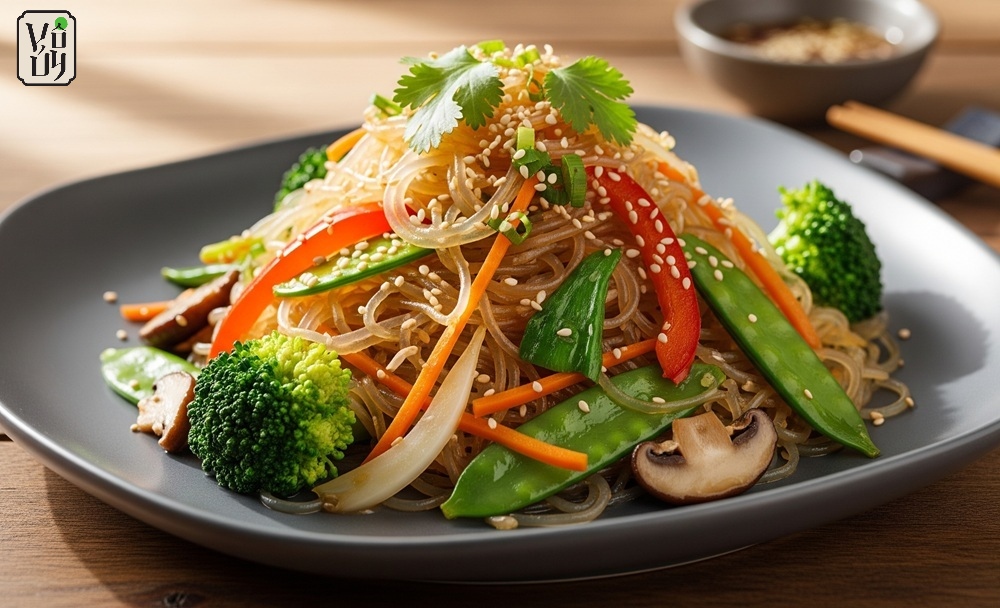
Ingredients and quantities for vegetarian stir-fried glass noodles
The ingredients below serve approximately three to four people. You can replace bok choy with choy sum, cabbage or bell peppers; however, mushrooms and tofu should be kept in the recipe to maintain a more balanced flavour.
- 100g dried mung bean glass noodles
- 100g carrots, cut into thin strips
- 50g green beans, cut into short pieces
- 100g bok choy, cut into bite-size pieces
- 50g bean sprouts
- 100g tofu, fried until golden and cut into strips or small pieces
- 50g vegetarian Vietnamese ham, cut into strips (optional)
- 50g shiitake mushrooms, straw mushrooms or king oyster mushrooms
- 2 tablespoons cooking oil, 2 tablespoons soy sauce, 1 teaspoon vegetarian seasoning and pepper
- Leek or minced garlic, depending on your preference and vegetarian style
Should you use mung bean or sweet potato glass noodles? Mung bean glass noodles are usually springy and easier to keep separated when stir-fried. Sweet potato glass noodles are more translucent and softer, so they need a shorter soaking time. Whichever type you choose, read the package instructions because noodle thickness varies by brand.
How to prepare vegetarian glass noodles so they do not clump
Soak the mung bean glass noodles in warm water for about 5–10 minutes, until they are soft but not fully expanded. Drain them, rinse briefly with cool water and let them dry thoroughly. You can toss the noodles with a small amount of cooking oil or sesame oil to keep the strands separated before stir-frying. Do not soak them for too long because they will continue cooking in the pan.
Rinse the mushrooms quickly instead of soaking them in water for too long, then drain and slice them. Cut the carrots into thin strips; keep the green beans and bok choy in similar sizes so they cook evenly. Wash the bean sprouts and set them aside because they are added at the final step. The tofu should be fried or pan-seared beforehand so it does not break apart when tossed with the noodles.
Before turning on the heat, place all seasonings beside the pan. Vegetarian stir-fried glass noodles need to be cooked quickly, so looking for ingredients while cooking can cause the vegetables to overcook and the noodles to stick to the pan.
How to make simple and delicious vegetarian stir-fried glass noodles
Step 1: Stir-fry the mushrooms and vegetables
Heat a pan with cooking oil and sauté the leek or garlic until fragrant. Add the carrots, green beans and mushrooms first, then stir-fry over medium-high heat. When the vegetables are almost cooked, add the bok choy and season with a little soy sauce and vegetarian seasoning. Do not add the bean sprouts at this stage because they release water quickly.
Step 2: Add tofu and vegetarian ham
Add the fried tofu and vegetarian Vietnamese ham to the pan, then toss gently for about one to two minutes so they absorb the seasoning. If using dried shiitake mushrooms, soak them until soft, squeeze them gently and stir-fry them with the vegetables for a fuller aroma. There is no need to cook the toppings for too long because the tofu and vegetarian ham are already cooked.
Step 3: Stir-fry the glass noodles
Add the well-drained noodles to the pan, followed by the remaining soy sauce and pepper. Use chopsticks or tongs to toss the noodles lightly and quickly over medium-high heat for about three to five minutes. If the noodles seem dry, add only one spoonful of water or vegetable stock at a time; adding too much liquid at once will make the dish mushy.
Step 4: Finish and serve
Add the bean sprouts last, toss for about 30 seconds and turn off the heat. Taste and adjust with more soy sauce or pepper if needed. Serve the noodles while hot; you can top them with toasted sesame seeds, roasted peanuts or fresh herbs for extra aroma.
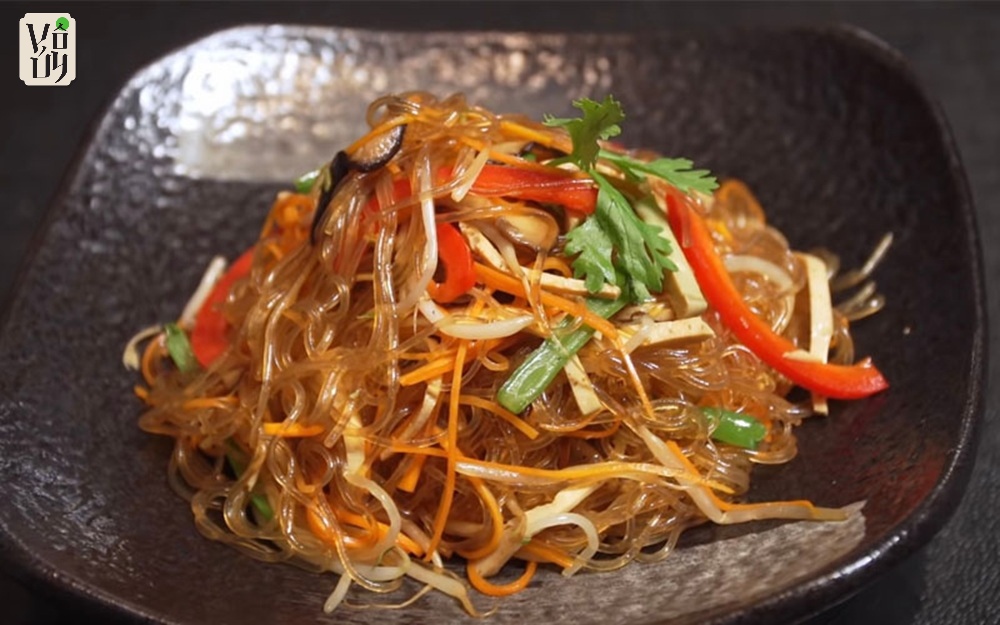
Tips for flavourful, non-sticky vegetarian glass noodles
- Use a wide, properly heated pan so the noodles have enough contact with the heat and do not steam.
- Stir-fry the vegetables first, then add the noodles so the vegetables do not become too soft.
- Do not season too heavily at the beginning because soy sauce, vegetarian oyster sauce and vegetarian ham may already be salty.
- Drain the noodles completely before stir-frying; this is the most effective way to prevent clumping.
- Add bean sprouts, herbs or toasted sesame seeds at the end so the dish retains its freshness and aroma.
If you want to prepare in advance, you can slice the vegetables, prepare the mushrooms and mix the seasonings beforehand. The noodles, however, should be soaked, drained and stir-fried close to serving time. This helps prevent them from becoming dry when left too long or mushy after reheating.
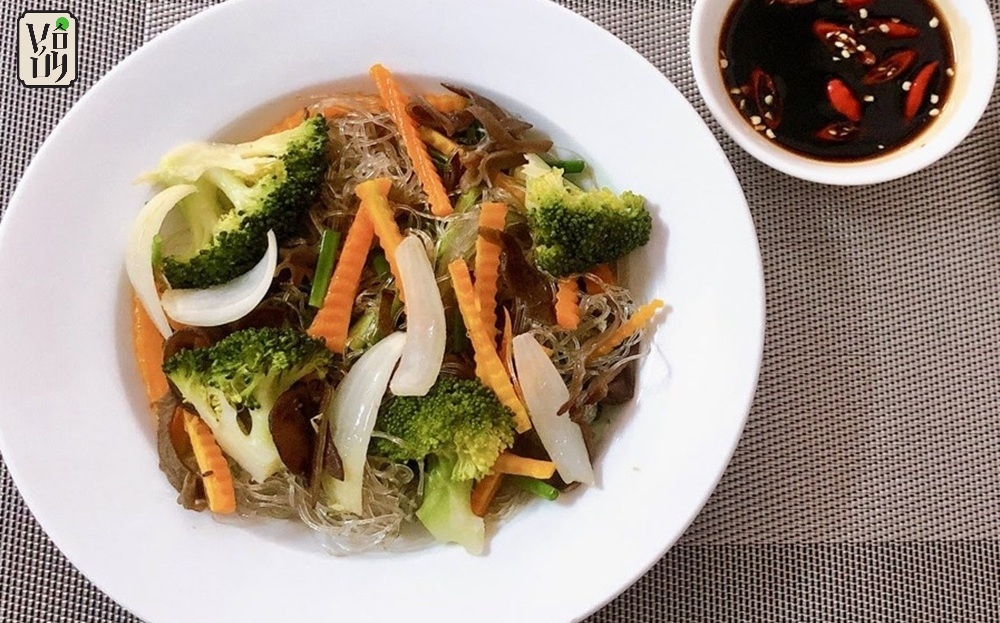
Important notes and common mistakes
The noodles are sticky or mushy
This usually happens when the noodles are soaked for too long, have not been drained properly or the pan contains too much liquid. Next time, soak the noodles only until just soft, rinse briefly with cool water, drain them well and add liquid in small amounts while stir-frying.
The vegetables release too much water
Vegetables can become watery if they are not drained properly or are cooked over heat that is too low. Wash and dry the vegetables carefully, cook firmer ingredients such as carrots and green beans before bok choy, and always add bean sprouts last.
The noodles are too bland or too salty
Vegetarian glass noodles absorb seasoning very quickly, so season in two stages: lightly season the vegetables first, then adjust after adding the noodles. If the dish is too salty, add more noodles, vegetables or hot water. Avoid adding too much sugar because it can overpower the dish’s clean flavour.
Frequently asked questions about vegetarian stir-fried glass noodles
How long can vegetarian stir-fried glass noodles be stored?
The noodles taste best when served immediately. If you need to store them, let the dish cool completely, place it in a sealed container and refrigerate it; consume it soon while the noodles still have a good texture. When reheating, use a non-stick pan and add small amounts of water to soften the noodles. Do not eat the dish if it has an unusual smell or signs of spoilage.
Can you stir-fry dry glass noodles without soaking them first?
No. Dry glass noodles need to be softened first so that they cook evenly. If added directly to the pan, they may remain hard in the centre while the outside burns or sticks.
What can vegetarian stir-fried glass noodles be served with?
This dish can be enjoyed on its own or served with vegetable soup, steamed vegetables and fresh fruit. If you want a noodle dish with broth instead, vegetarian hủ tiếu with a light vegetable broth is another suitable choice.
For more vegetarian meal ideas, explore a variety of vegetarian noodle dishes, including noodle soups, mixed noodles and stir-fried dishes, depending on the time you have available and your family’s preferences.
Conclusion
Vegetarian stir-fried glass noodles will be springy and well separated when the noodles are soaked just enough, the ingredients are thoroughly drained and everything is stir-fried in the right order. If you would like to explore more prepared plant-based dishes, browse Vô Úy’s vegetarian menu. When dining with family or friends, you can also reserve a table at Vô Úy Vegetarian Restaurant.