

 0902 353 527
  cskh@nhahangvouy.com

How to Make Soft, Fragrant, and Beautifully Vietnamese red sticky rice
Vietnamese red sticky rice, also known as Xôi Gấc, is a traditional dish commonly served during Lunar New Year, weddings, and important Vietnamese ceremonies. The dish stands out for its natural orange-red color, soft and chewy glutinous rice, and the delicate aroma of gac fruit and coconut milk. In this guide, Vô Úy Vegetarian Restaurant will show you how to make Vietnamese red sticky rice using either a traditional steamer or a rice cooker.
The Meaning of Vietnamese red sticky rice in Vietnamese Culture
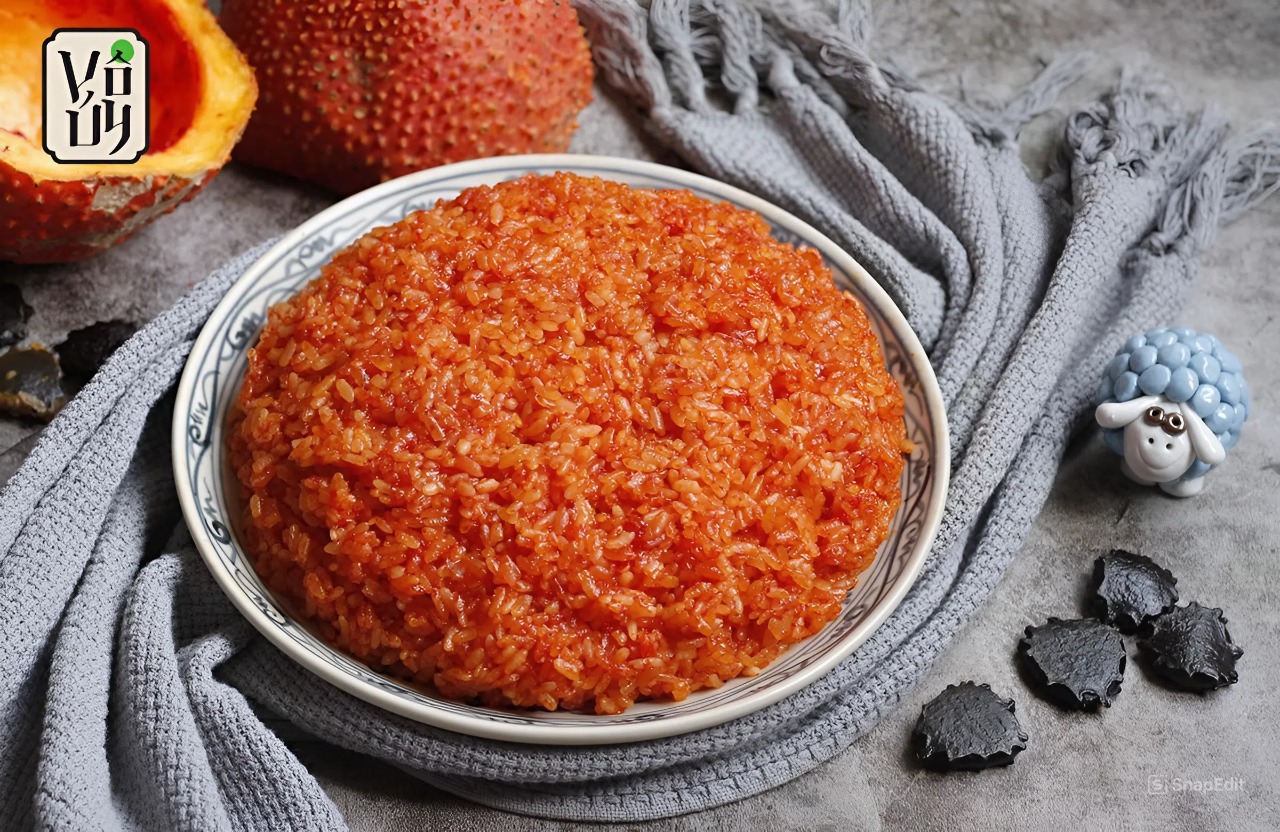
Vietnamese red sticky rice is made primarily from glutinous rice and the red aril surrounding the seeds of ripe gac fruit. When mixed and steamed together, the gac flesh gives the sticky rice its natural orange-red color, distinctive fragrance, and subtle richness.
Depending on each family’s preference, Vietnamese red sticky rice can be prepared sweet or lightly seasoned. In Northern Vietnam, it is usually made with a moderate amount of sugar to preserve a delicate sweetness. In Southern Vietnam, many recipes include coconut milk for a richer flavor and more fragrant aroma.
Besides traditional Vietnamese red sticky rice, there are several popular variations, including Vietnamese red sticky rice with mung bean, three-layer Vietnamese red sticky rice, and Vietnamese red sticky rice hoa cau. When vegetable oil is used instead of animal fat, xôi gấc becomes a completely vegetarian dish suitable for ceremonial offerings or light meat-free meals.
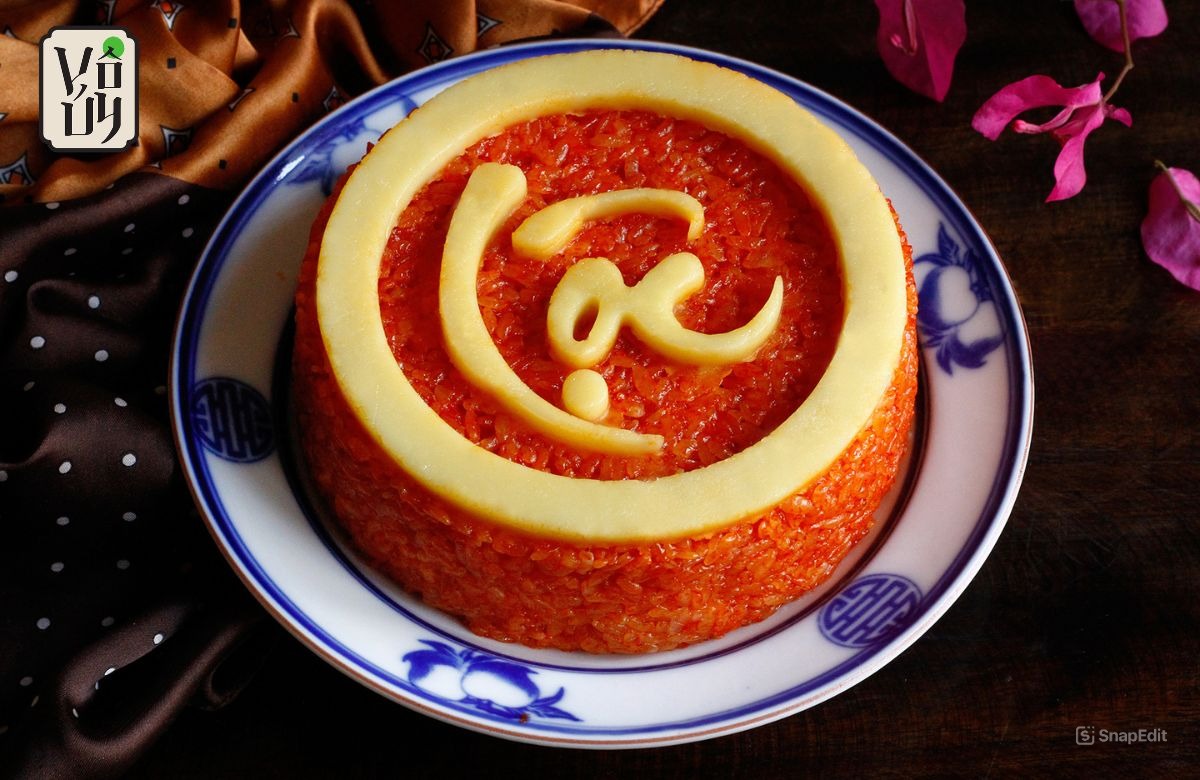
The red color of Vietnamese red sticky rice symbolizes good fortune, happiness, and auspicious new beginnings. For this reason, the dish is often served during Lunar New Year, weddings, engagement ceremonies, baby’s first-month celebrations, and other important family occasions.
At the beginning of a new year, a plate of bright red Vietnamese red sticky rice is placed on the ancestral altar to express the family’s wish for prosperity and good luck. At weddings, its red color represents lasting love and a happy marriage.
Beyond its cultural significance, gac sticky rice is also loved for its attractive appearance and pleasant flavor. Its soft, chewy grains and mildly sweet, rich taste make it delicious on its own or alongside a variety of vegetarian dishes.
The Meaning of Vietnamese red sticky rice in Vietnamese Culture
Ingredients for Making Vietnamese red sticky rice at Home
To make Vietnamese red sticky rice at home, prepare the following ingredients:
- 500 g high-quality glutinous rice
- ½–1 ripe gac fruit, depending on its size
- 80–120 ml coconut milk
- 50–80 g sugar
- 1–2 tablespoons Vietnamese rice wine or another clear rice wine
- ½ teaspoon salt
- 1–2 tablespoons vegetable oil
You can adjust the amount of sugar and coconut milk according to your preference. If you plan to serve gac sticky rice with savory vegetarian dishes, reduce the sugar. For a richer coconut flavor, you may use approximately 120 ml of coconut milk, but it should be added gradually rather than all at once.
Rice wine is optional. However, a small amount helps separate the red gac flesh from the seeds, enhances its aroma, and produces a brighter color after steaming.
How to Choose Ingredients for Soft and Vibrant Vietnamese red sticky rice
The quality of the ingredients directly affects the color, aroma, and texture of your Vietnamese red sticky rice. Choosing the right glutinous rice and gac fruit is therefore an essential step.
How to Choose Glutinous Rice
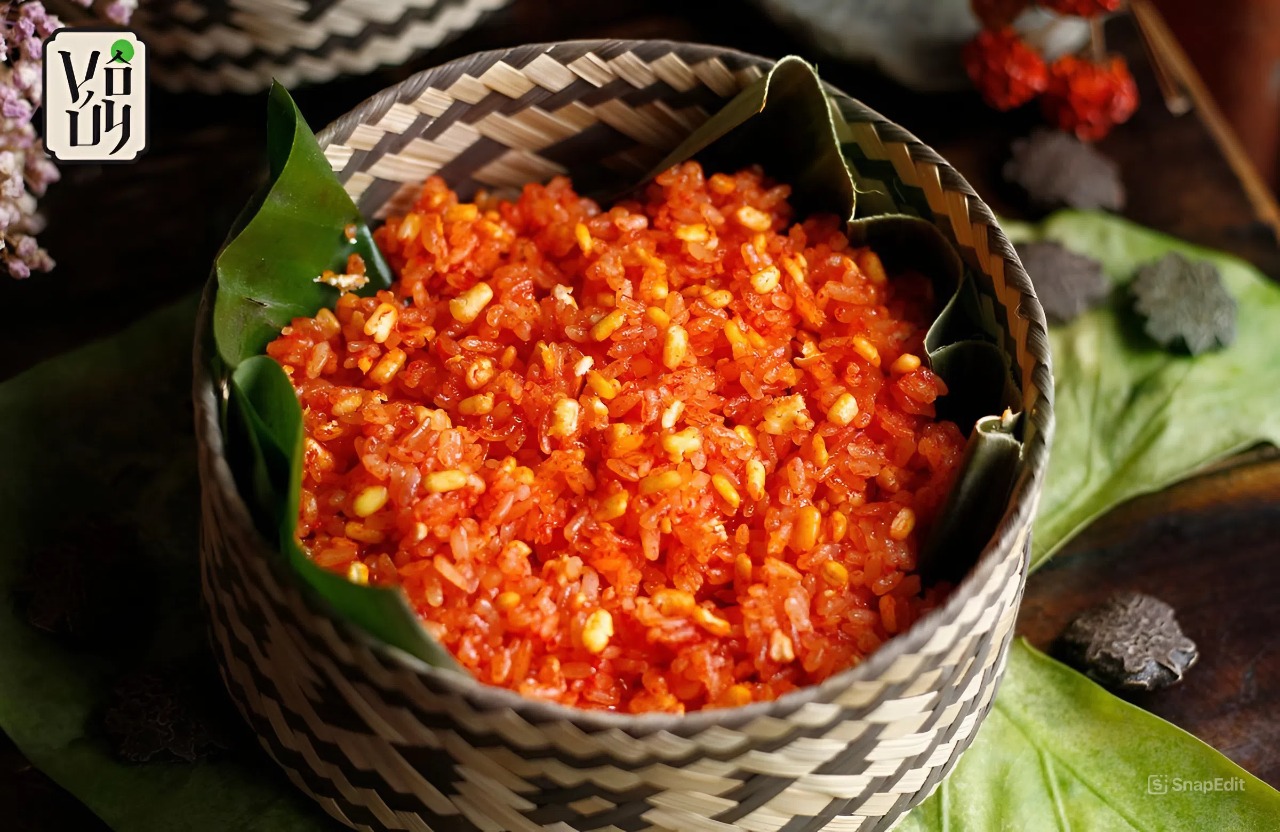
Choose glutinous rice with evenly sized, plump grains that are not broken. Good-quality rice usually has a naturally opaque white appearance, a mild fragrance, and no signs of mold or moisture damage.
Vietnamese “nếp cái hoa vàng” is an excellent option if you want highly fragrant and chewy sticky rice. You can also use your family’s preferred variety, provided that the rice is fresh, free from insects, and absorbs water well.
Avoid washing the rice too vigorously, as this may break the grains. During steaming, broken grains cook more quickly and may cause the finished sticky rice to lose its light, separated texture.
How to Choose a Ripe Gac Fruit
The gac fruit used for gac sticky rice should be naturally ripe, with orange-red skin and a relatively heavy feel. Choose a fruit with evenly expanded spikes, thin skin, and no bruised or damaged areas.
When cut open, the flesh surrounding the seeds should be bright red and free from any sour smell. Do not use a gac fruit that is leaking liquid, smells unusual, or has discolored flesh.
If the fruit is too small or contains very little flesh, the sticky rice may have a pale color. On the other hand, using too much gac can create an overpowering aroma and make the overall flavor difficult to balance.
How to Choose Ingredients for Soft and Vibrant Vietnamese red sticky rice
How to Make Traditional Vietnamese red sticky rice Using a Steamer
Steaming cooks the glutinous rice with steam rather than direct contact with water. As a result, the finished grains are generally lighter, more separated, and less likely to become mushy. This method is especially suitable when preparing gac sticky rice for ceremonial offerings, family gatherings, or large events.
Step 1: Wash and Soak the Glutinous Rice
Gently wash the glutinous rice two or three times to remove dust and impurities. Soak it in cold water for 6–8 hours. If you are short on time, soak the rice in warm water for approximately 3–4 hours.
Once the rice has absorbed enough water, rinse it once more and transfer it to a colander. Let the rice drain thoroughly before mixing it with the gac flesh. Excess water is one of the most common causes of sticky rice becoming wet, dense, and mushy.
When the rice is completely drained, add ½ teaspoon of salt and toss gently. The salt enhances the overall flavor and helps balance the sweetness.
Step 2: Prepare the Gac Fruit
Cut the gac fruit in half and use a spoon to scoop the red pulp into a bowl. Add 1–2 tablespoons of rice wine and gently squeeze or massage the pulp until the red flesh separates from the seeds.
Once the flesh has come away, remove and discard the black seeds. You may include a small amount of the soft yellow pulp near the skin for additional richness. However, using too much yellow pulp may make the color less vibrant and affect the flavor.
If you do not want to use rice wine, you can separate the gac flesh from the seeds by hand. In this case, choose a fully ripe fruit so that the flesh comes away easily and provides sufficient color.
Step 3: Mix the Gac Flesh with the Rice
Add the prepared gac flesh to the drained glutinous rice. Gently fold the mixture from the bottom upward until every grain is evenly coated with the orange-red color.
Avoid squeezing or mixing too vigorously, as this may break the rice grains. After mixing, let the rice rest for approximately 20–30 minutes so the natural gac color can absorb more evenly.
Step 4: Steam the Rice for the First Time
Fill approximately one-third of the bottom pot with water and bring it to a boil. The water level must remain below the steamer basket so that it does not touch the rice directly.
Once the water is boiling, place the rice in the steamer basket in small handfuls. Do not compress the rice tightly. Spread it into a relatively even layer and create several small holes on the surface to allow steam to circulate.
Cover and steam for approximately 25–35 minutes. The actual cooking time will depend on the amount and type of rice, as well as the size of the steamer.
Wrap a clean kitchen towel around the underside of the lid during steaming. The towel will absorb condensation and prevent water droplets from falling onto the top layer of rice and making it mushy.
Step 5: Add Coconut Milk and Vegetable Oil
When the rice is approximately 80% cooked, remove the lid and gently fluff it. Drizzle in the coconut milk in two or three additions, using only a small amount each time.
After each addition, gently mix the rice so that the coconut milk is evenly distributed. Do not pour all the coconut milk into one area, as this can make the bottom layer wet and sticky.
Next, add 1–2 tablespoons of vegetable oil. The oil gives the grains an attractive shine, helps them stay soft for longer, and prevents them from sticking together excessively.
Step 6: Add Sugar and Finish Steaming
Only add the sugar when the rice is almost fully cooked. Adding sugar too early can prevent the grains from softening properly and may cause the sticky rice to release excess liquid.
Sprinkle the sugar evenly over the surface and gently fluff the rice. Continue steaming for another 5–10 minutes so that the sugar dissolves and absorbs into the grains.
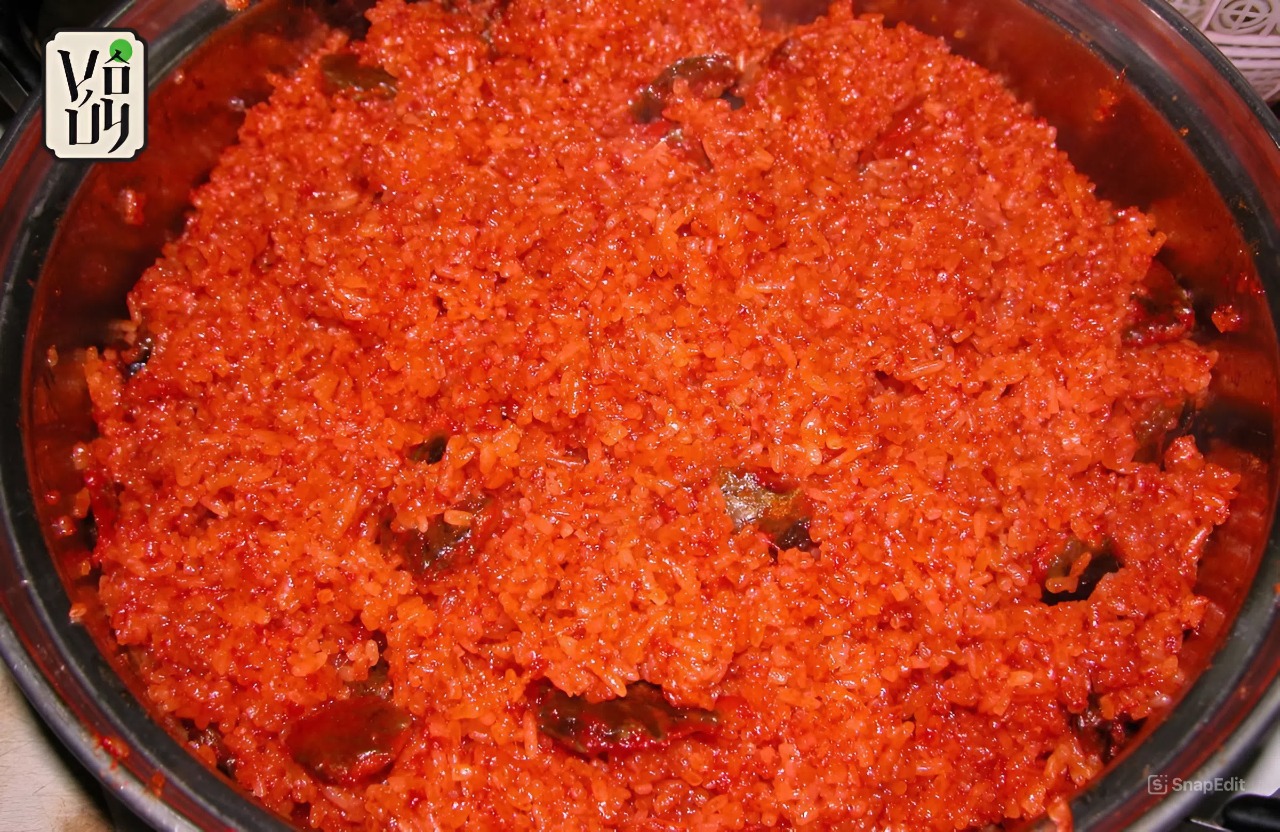
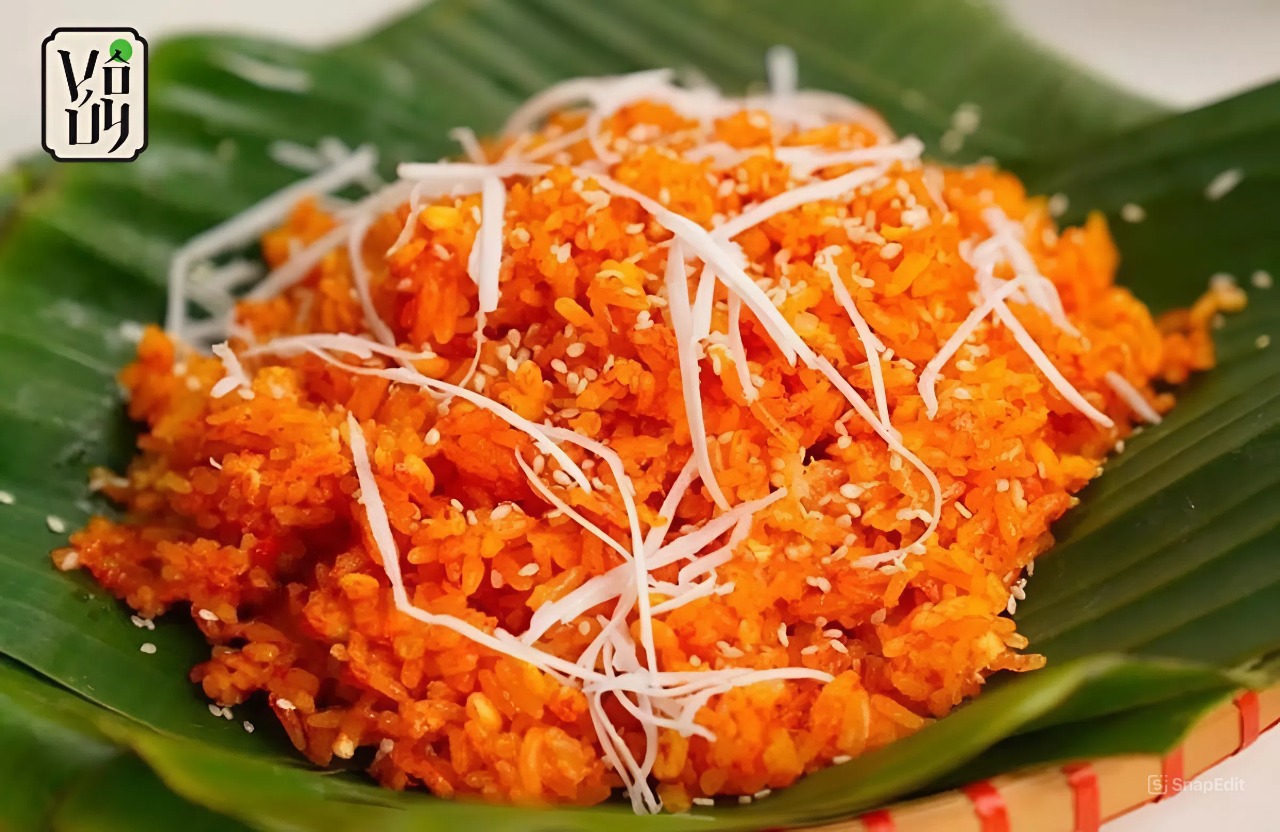
Properly cooked gac sticky rice should have translucent, soft, and chewy grains that still retain their shape. The finished dish should have an even orange-red color, a lightly glossy surface, and no excess liquid or heavy clumps.
How to Make Traditional Vietnamese red sticky rice Using a Steamer
How to Make Vietnamese red sticky rice in a Rice Cooker
If you do not have a traditional steamer, you can still make Vietnamese red sticky rice in a rice cooker. This method is convenient, although you need to control the amount of water more carefully.
Using a Rice Cooker with a Steaming Basket
Pour water into the inner pot and place the rice and gac mixture in the steaming basket. Turn on the cooking function and follow the same steps used for traditional steaming.
When the sticky rice is nearly cooked, drizzle in the coconut milk, add the vegetable oil, and gently fluff the grains. Finally, add the sugar and steam for another 5–10 minutes.
This method produces lighter and more separated grains than cooking the rice directly in the inner pot.
Cooking Directly in the Rice Cooker Pot
Place the soaked glutinous rice and gac mixture directly into the rice cooker. Because the rice has already absorbed a considerable amount of water during soaking, add only a very small amount of water. The water should not cover the surface of the rice as it would when cooking regular white rice.
Turn on the rice cooker as usual. When it switches to the keep-warm setting, open the lid and check the texture. If the grains are still firm, drizzle a few spoonfuls of hot water over the surface, gently mix, and start another cooking cycle.
Add the coconut milk, vegetable oil, and sugar only when the rice is nearly cooked. Leave the rice cooker on the keep-warm setting for another 5–10 minutes to allow the ingredients to absorb evenly.
How to Make Three-Layer Vietnamese red sticky rice with Mung Bean
Three-layer Vietnamese red sticky rice with mung bean has an elegant appearance and is ideal for weddings, Lunar New Year celebrations, and ceremonial offerings. Two red layers of xôi gấc surround a golden mung bean layer, creating an attractive color contrast.
Prepare an additional 200 g of split, hulled mung beans. Soak the beans for approximately 4–6 hours, steam until tender, and mash until smooth.
Transfer the mung beans to a pan, add a small amount of sugar and vegetable oil, and cook over low heat until the mixture becomes smooth and cohesive.
Prepare the xôi gấc using the traditional steaming method. You may reduce the amount of sugar in the sticky rice because the mung bean filling is already sweetened.
Lightly coat a mold with vegetable oil. Add one layer of xôi gấc, followed by a layer of mung bean paste and a final layer of xôi gấc. Press gently and turn the mold onto a plate while the sticky rice is still warm.
Do not press too firmly, as this may crush the rice grains and create an overly dense texture. For decoration, sprinkle a small amount of toasted sesame seeds or shredded coconut on top.
Tips for Vibrant Red Vietnamese red sticky rice That Is Not Mushy
The following tips will help you achieve better color, flavor, and texture:
- Drain the soaked glutinous rice thoroughly before mixing it with the gac flesh.
- Preheat the steamer and bring the water to a boil before adding the rice.
- Do not pack the rice tightly into the steamer basket.
- Keep the water level below the bottom of the basket.
- Use a clean kitchen towel to prevent condensation from dripping onto the rice.
- Add coconut milk gradually in several additions.
- Add sugar only when the sticky rice is nearly cooked.
- Gently fluff the rice from the bottom upward to avoid breaking the grains.
- Do not seal hot Vietnamese red sticky rice immediately in an airtight container, as trapped steam can make it mushy.
The final color depends largely on the ripeness and amount of gac flesh used. For the best result, rely on the fruit’s natural color instead of adding artificial food coloring.
Tips for Vibrant Red Vietnamese red sticky rice That Is Not Mushy
How to Fix Dry, Mushy, or Undercooked Vietnamese red sticky rice
The Sticky Rice Is Dry or Hard
Dry xôi gấc is usually caused by insufficient soaking time or a lack of steam in the pot.
Drizzle a small amount of warm water over the surface, gently fluff the grains, and continue steaming for approximately 5–10 minutes. Do not add too much water at once, as the bottom layer may quickly turn from dry to mushy.
The Sticky Rice Is Mushy
Poorly drained rice, too much coconut milk, and condensation dripping from the lid are common causes of mushy xôi gấc.
Spread the rice into a thin layer in the steamer and steam it for several more minutes with the lid slightly open, allowing excess moisture to escape. If the grains have already broken down significantly, it may not be possible to restore their original texture completely.
The Sticky Rice Is Undercooked or Unevenly Cooked
This usually occurs when the rice has been packed too tightly or the steam cannot circulate properly.
Gently fluff the rice, make a few additional holes in the surface, and continue steaming. If the water in the pot has evaporated, add only hot water. Cold water will cause the temperature to drop suddenly and extend the cooking time.
The Color Is Too Pale
An underripe gac fruit or insufficient gac flesh can result in pale sticky rice. Choose a fully ripe, deep-red fruit and adjust the proportion of gac in your next batch.
Once the sticky rice is fully cooked, you should not try to improve the color by adding raw gac flesh. It will be difficult to distribute evenly and may not cook thoroughly.
What to Serve with Vietnamese red sticky rice
Sweet gac sticky rice can be served with sesame salt, roasted peanuts, shredded coconut, or mung bean paste. These ingredients help balance the sweetness and add a pleasant nutty flavor.
If the sticky rice is only lightly sweetened, you can serve it with vegetarian Vietnamese sausage, vegetarian spring rolls, braised mushrooms, glazed tofu, or braised vegetables. The combination of chewy sticky rice and savory plant-based dishes creates a satisfying and well-balanced meal.
For ceremonial offerings, you can shape Vietnamese red sticky rice using flower-shaped, round, or traditional double-happiness molds. Since the sticky rice already has a vibrant natural color, it does not require elaborate decoration.
How Many Calories Are in Vietnamese red sticky rice?
The calorie content of Vietnamese red sticky rice depends on the proportions of glutinous rice, sugar, vegetable oil, and coconut milk. Because each recipe is different, no single calorie figure applies to every serving.
Depending on the recipe, 100 g of gac sticky rice may contain approximately 200–400 calories. Versions made with more sugar, oil, or coconut milk generally contain more calories than lightly seasoned versions.
People who are managing their weight can still enjoy gac sticky rice in a controlled portion. You can reduce the sugar and coconut milk and serve the sticky rice with vegetables or low-oil vegetarian dishes.
Xôi gấc is rich in carbohydrates and provides a considerable amount of energy. However, it should not be treated as a food that cures health conditions or replaces a balanced diet.
How to Store and Reheat Xôi Gấc
Xôi gấc tastes best when eaten on the day it is prepared. If you have leftovers, allow the sticky rice to cool slightly, divide it into individual portions, and store them in airtight containers.
Do not leave gac sticky rice at room temperature for too long, especially in hot weather. Warm and humid conditions may cause it to develop a sour taste or unpleasant smell.
When refrigerated, the sticky rice will gradually become firm as its starch structure changes. Consume refrigerated gac sticky rice as soon as possible. For longer storage, divide it into small portions and freeze them.
Steaming is the best reheating method because it restores a texture similar to freshly cooked sticky rice. You can also use a microwave, covering the rice with a lid or damp paper towel to prevent moisture loss.
Once a portion has completely thawed, avoid freezing it again multiple times.
How to Store and Reheat Vietnamese red sticky rice
Enjoy Vegetarian Cuisine at Vô Úy Restaurant
Xôi gấc is more than a familiar Vietnamese dish. It also reflects the richness and diversity of Vietnamese vegetarian cuisine. With simple, familiar ingredients, you can create a beautiful and elegant dish filled with cultural meaning.
If you would rather enjoy a carefully prepared vegetarian meal than cook at home, Vô Úy Vegetarian Restaurant is an excellent destination for family meals, friendly gatherings, and special occasions. Its peaceful atmosphere and diverse vegetarian menu offer diners a relaxing and complete culinary experience.
You can book a table at Vô Úy to explore the menu, check which dishes are available on the day of your visit, and reserve a suitable table for your group.
Frequently Asked Questions About Xôi Gấc
How Much Glutinous Rice Can Be Cooked with One Gac Fruit?
The appropriate amount of rice depends on the size of the fruit and the quantity of flesh it contains. Generally, one ripe gac fruit can be used for approximately 500 g to 1 kg of glutinous rice.
Check the color of the rice after mixing and adjust the amount of gac flesh if necessary.
Can I Make Xôi Gấc Without Rice Wine?
Yes. You can make gac sticky rice without rice wine. Choose a fully ripe gac fruit and mix the flesh thoroughly with the glutinous rice so that its natural color is evenly distributed.
How Long Should Xôi Gấc Be Steamed?
Xôi gấc generally requires approximately 30–45 minutes of steaming. The exact cooking time depends on the amount of rice, the soaking time, the type of steamer, and the consistency of the steam.
When Should Sugar Be Added to Vietnamese red sticky rice?
Add the sugar when the sticky rice is nearly cooked. This allows the grains to soften evenly and reduces the risk of excess liquid forming.
Is Vietnamese red sticky rice a Vegetarian Dish?
Vietnamese red sticky rice is vegetarian when it is made with vegetable oil and contains no animal fat. If it is served with side dishes, make sure that any sausage, meat floss, or accompanying food is also made entirely from plant-based ingredients.
Can Vietnamese red sticky rice Be Kept Overnight?
Yes, gac sticky rice can be kept overnight if it is properly cooled and refrigerated. Do not leave it at room temperature overnight, as it may become sour or spoil.
Conclusion
Learning how to make Vietnamese red sticky rice is not difficult, but every step requires careful attention. Choose high-quality glutinous rice, use a fully ripe gac fruit, drain the soaked rice thoroughly, and control the amount of water throughout the steaming process. Sugar and coconut milk should also be added at the right time to keep the grains soft and chewy without making them mushy.
With this recipe, you can prepare an attractive plate of vibrant red Vietnamese sticky rice for breakfast, Lunar New Year, or a family ceremonial offering. If you would like to discover more delicate vegetarian flavors in a peaceful setting, contact Vô Úy Vegetarian Restaurant to explore the menu and reserve a table.