

 0902 353 527
  cskh@nhahangvouy.com

What Is Vegetarian Sausage? 8 Delicious, Diverse, and Easy-to-Make Types of Vegetarian Sausage at Home
Vegan sausage in Vietnamese cuisine refers to a diverse family of plant-based loaves, patties, rolls, and leaf-wrapped dishes collectively known as chả chay. Popular varieties include vegan chả lụa, chả cá, chả lá lốt, mushroom sausage, tofu sausage, seaweed sausage, crab-style chả, and chả cốm.
Unlike Western-style sausages, Vietnamese vegan sausage is not always cylindrical. Depending on the variety, it may be shaped into a steamed loaf, flat patty, ball, or leaf-wrapped portion. Each type has a different texture and works best with particular dishes, including rice, bread, noodle soups, braised dishes, and Vietnamese vegetarian feast tables.
What Is Vegan Sausage in Vietnamese Cuisine?
Vegan sausage is an English term commonly used for plant-based versions of Vietnamese chả. These dishes use plant-derived ingredients to create some of the shapes, textures, and culinary uses associated with traditional Vietnamese chả.
Depending on the variety, the main ingredients may include tofu skin, tofu, mushrooms, young green rice, seaweed, vegetables, grains, and different binding ingredients. The mixture may be steamed, fried, pan-seared, grilled, or added to broth.
The differences between each type do not come from ingredients alone. Moisture control, binding, seasoning, shaping, and cooking methods all affect the finished texture. Steamed vegan sausage is usually soft and easy to slice, while fried or pan-seared varieties tend to have a firmer surface.
In this guide, “vegan sausage” specifically refers to versions made without animal-derived ingredients. However, packaged products labelled chả chay may use different recipes, so people following a strict vegan diet should still check the ingredient list.
What Is Vegan Sausage Usually Made From?
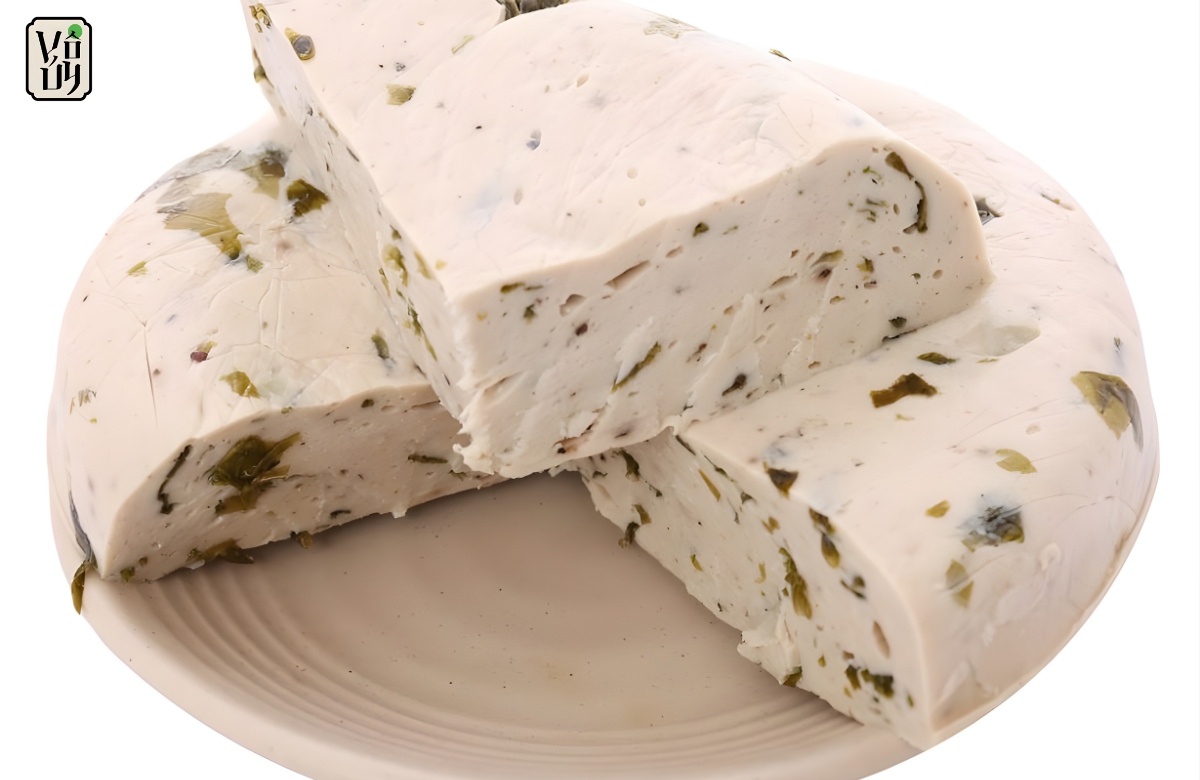
There is no single ingredient list for every type of vegan sausage. The recipe depends on the intended texture, shape, and cooking method. Common ingredient groups include:
- Soy-based ingredients: Tofu skin, tofu, soybean pulp, or other soy-based products.
- Mushrooms and vegetables: Oyster mushrooms, shiitake mushrooms, wood ear mushrooms, carrots, taro, and other vegetables.
- Grains and sea vegetables: Young green rice, seaweed, rice products, or other plant-based ingredients used for flavor and texture.
- Binding ingredients: Tapioca starch, cornstarch, wheat flour, or another binder, depending on the recipe.
- Herbs and seasonings: Pepper, leek, wild betel leaves, soy sauce, and other seasonings.
The exact ingredients vary by recipe and manufacturer. People with food allergies or specific dietary requirements should check the product label rather than relying only on the name “vegan sausage” or “chả chay.”
8 Popular Types of Vegan Sausage
Vietnamese vegan sausage can be divided into several varieties based on the main ingredients, shape, texture, and intended use. The table below compares eight common types.
| Type | Common Base Ingredients | Key Characteristics | Best Uses |
|---|---|---|---|
| Vegan chả lụa | Tofu skin, tofu, mushrooms, or other plant-based ingredients | Cylindrical and sliceable, with a soft-to-firm texture depending on the recipe | Rice, bread, rice noodles, braised dishes, and stir-fries |
| Vegan chả cá | Tofu, mushrooms, seaweed, taro, or vegetables | Usually shaped into patties, balls, or slices | Frying, braising, sauces, noodle soups, and broths |
| Vegan chả lá lốt | Tofu, mushrooms, vegetables, and wild betel leaves | Small leaf-wrapped portions with a distinctive herbal aroma | Pan-frying, grilling, rice meals, and fresh herbs |
| Mushroom vegan sausage | Oyster mushrooms, shiitake mushrooms, wood ear mushrooms, or a combination | Savory flavor with a texture that varies according to the mushrooms used | Pan-frying, braising, wraps, and noodle dishes |
| Tofu vegan sausage | Tofu combined with mushrooms, vegetables, and a binder | Soft, easy to season, and easy to shape | Steaming, frying, tomato sauce, and family meals |
| Seaweed vegan sausage | Seaweed combined with tofu, mushrooms, or another plant-based base | A noticeable seaweed aroma and flavor | Pan-frying, rice meals, wraps, and noodle dishes |
| Plant-based crab-style chả | Shredded plant ingredients, tofu, mushrooms, and seasonings | Usually designed to hold together in soups and noodle dishes | Thick noodle soup, vermicelli soup, broths, and other dishes with stock |
| Vegan chả cốm | Young green rice combined with a plant-based mixture | Fragrant, tender, and slightly chewy | Pan-frying, family meals, and Vietnamese vegetarian feast tables |
Characteristics of Each Type of Vegan Sausage
1. Vegan Chả Lụa – Vietnamese Steamed Vegan Sausage
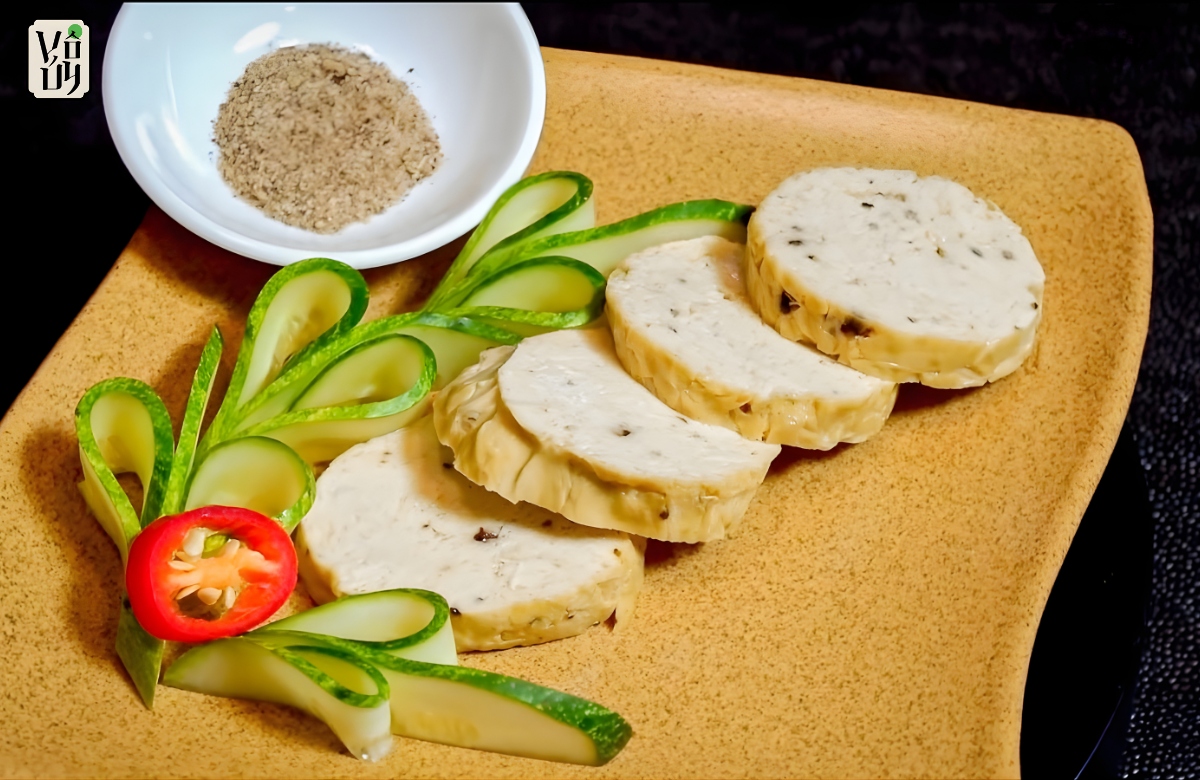
Vegan chả lụa is a Vietnamese steamed vegan sausage usually formed into a cylindrical loaf. Its shape makes it convenient to store, slice, and combine with different meals.
Depending on the recipe, vegan chả lụa may be made from tofu skin, tofu, mushrooms, or a mixture of plant-based ingredients that provides structure and binding. The finished texture can range from soft and tender to relatively firm and chewy.
This type of vegan sausage works well with rice, bread, rice noodles, and fresh vegetables. It can also be sliced for braised, glazed, or stir-fried dishes. Allowing the loaf to settle after cooking helps it retain its shape when sliced.
2. Vegan Chả Cá – Plant-Based Vietnamese Fish Cake
Vegan chả cá is a plant-based version of Vietnamese fish cake. Recipes may use tofu, mushrooms, seaweed, soybean pulp, taro, or vegetables. The mixture can be shaped into patties, balls, or slices depending on how it will be served.
A well-bound version can be fried, braised, served with sauce, or added to noodle dishes. For detailed ingredients and preparation methods, see Vô Úy’s vegetarian fish cake recipe.
3. Vegan Chả Lá Lốt – Wild Betel Leaf-Wrapped Vegan Chả
Vegan chả lá lốt consists of a tofu, mushroom, or vegetable filling wrapped in wild betel leaves. The leaves give the dish a distinctive herbal aroma and distinguish it from loaf-shaped or patty-shaped vegan sausage.
Chả lá lốt is commonly pan-fried or grilled. The filling should not contain too much moisture, as an overly wet mixture may be difficult to wrap and may release water during cooking.
You can find a complete method in Vô Úy’s guide to vegetarian wild betel leaf rolls.
4. Mushroom Vegan Sausage
Mushroom vegan sausage can be made with oyster mushrooms, shiitake mushrooms, wood ear mushrooms, or a combination of several varieties. Each type of mushroom contributes a different aroma and texture.
Because mushrooms naturally contain moisture, they should be drained properly before mixing. If the mixture is too wet, the sausage may be difficult to shape or may remain too soft after cooking.
Mushroom vegan sausage can be pan-fried, braised, used in rice paper wraps, served with rice, or added to noodle dishes and soups.
5. Tofu Vegan Sausage
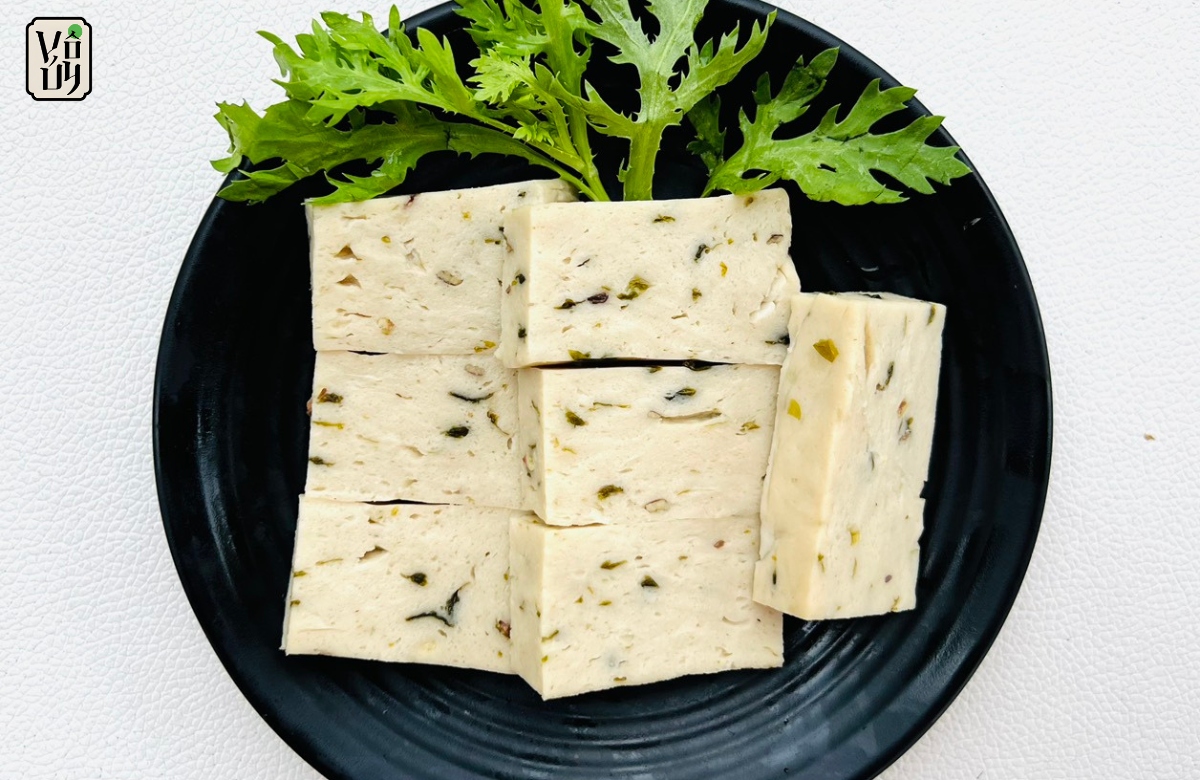
Tofu vegan sausage has a soft base that is easy to season and combine with mushrooms, vegetables, or herbs. It can be shaped into balls, flat patties, small molded portions, or a steamed loaf.
Draining the tofu before mixing helps prevent the mixture from becoming too loose. Tofu vegan sausage can be steamed, fried, pan-seared, braised, or cooked with tomato sauce.
Because tofu is made from soybeans, this variety is unsuitable for people with soy allergies unless a clearly identified soy-free alternative is used.
6. Seaweed Vegan Sausage
Seaweed gives this type of vegan sausage a distinctive aroma and flavor. It is commonly combined with tofu, mushrooms, vegetables, or another plant-based base.
Seaweed vegan sausage works well in pan-fried dishes, wraps, rice meals, and some noodle dishes. The amount of seaweed should be balanced so that its flavor does not overpower the remaining ingredients.
If dried seaweed is used, it should be prepared according to its package instructions before being added to the sausage mixture.
7. Plant-Based Crab-Style Chả
Plant-based crab-style chả is usually shaped and seasoned for use in noodle soups, broths, or dishes inspired by Vietnamese crab noodle recipes. Its ingredients may include tofu, mushrooms, vegetables, seaweed, or shredded plant-based ingredients.
The mixture needs sufficient binding so that the pieces do not break apart during cooking. This variety is especially suitable for thick noodle soup, vermicelli soup, and other dishes where the chả is served in broth.
8. Vegan Chả Cốm – Young Green Rice Vegan Sausage
Vegan chả cốm is a Vietnamese vegan sausage made with young green rice and a plant-based mixture. It is commonly shaped into patties and pan-fried so that the outside becomes firmer while the inside remains tender.
This type has a recognizable young green rice aroma and a soft, slightly chewy texture. It can be served in everyday family meals or as part of a Vietnamese vegetarian feast table.
The mixture should not be overly wet, as excess moisture can make the patties difficult to shape and more likely to break during cooking.
How to Choose Vegan Sausage for Different Dishes
No single type of vegan sausage is suitable for every cooking method. Consider its shape, texture, moisture level, and ability to hold together when exposed to heat, sauce, or broth.
Rice, Bread, Braised, and Glazed Dishes
Vegan chả lụa, mushroom sausage, and tofu sausage are convenient choices for rice meals. Sliced chả lụa can also be served with bread, fresh rice noodles, cucumber, and herbs.
For braised or glazed dishes, choose a vegan sausage with enough firmness to retain its shape while being turned or simmered in sauce.
Fried, Pan-Seared, or Grilled Dishes
Chả cốm, chả lá lốt, chả cá, and seaweed vegan sausage work well with cooking methods that create a firmer surface.
Keep the heat under control so that the outside does not cook too quickly while the center is still developing its intended texture.
Noodle Soups and Broths
Plant-based crab-style chả, chả cá, and sliced chả lụa can be added to noodle soups or broths. Choose a well-bound variety and add it at an appropriate stage to reduce the chance of the sausage breaking apart.
Wraps and Quick Meals
Sliced chả lụa, pan-seared mushroom sausage, and tofu sausage can be served with fresh vegetables, rice vermicelli, bread, or rice paper.
For these dishes, use portions that are easy to eat and do not release too much moisture.
Vegetarian Feast Tables and Family Gatherings
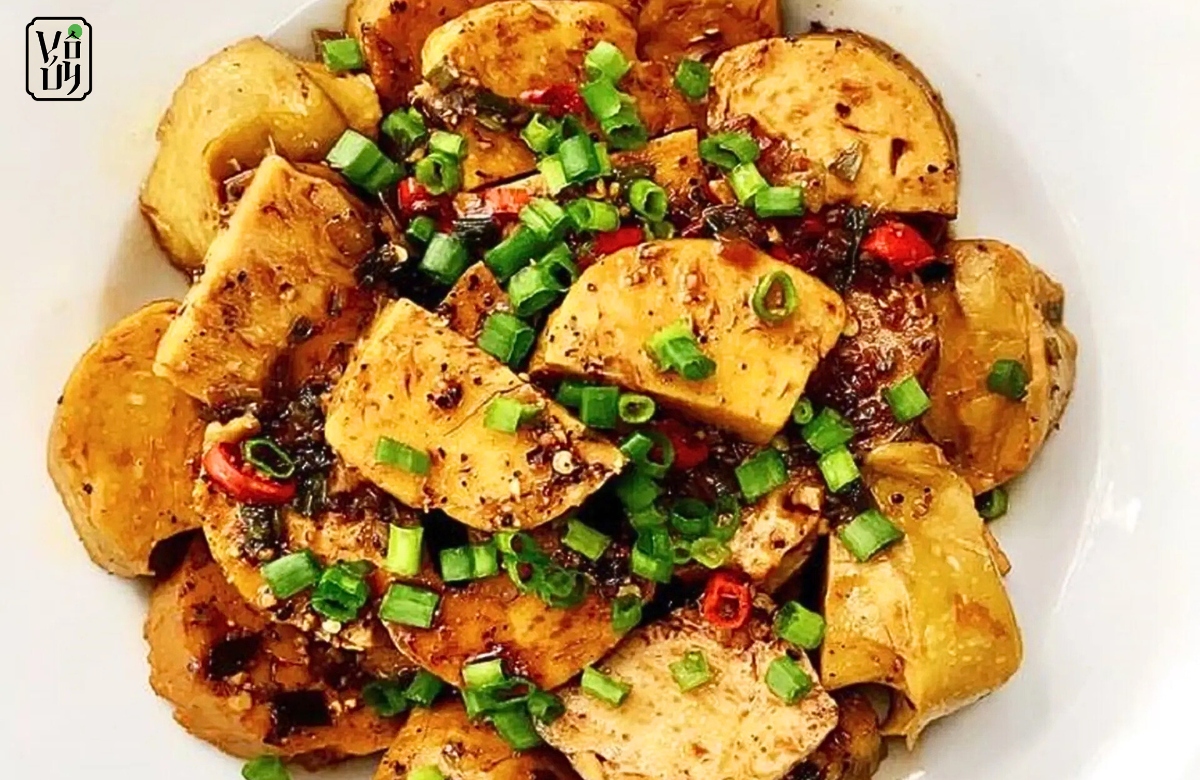
Instead of serving only one type of vegan sausage, a Vietnamese vegetarian feast table may combine sliced chả lụa, pan-seared chả cốm, and aromatic chả lá lốt.
The differences in shape, color, texture, and cooking method help create a more varied meal.
General Tips for Making Vegan Sausage at Home
Every type of vegan sausage has its own recipe, but the following principles can help improve binding, shape, and texture.
- Drain high-moisture ingredients: Mushrooms, tofu, and vegetables may release water. Drain or press them before mixing.
- Process ingredients appropriately: An overly smooth mixture may lose its natural texture, while very large pieces may make binding difficult.
- Adjust the binder gradually: Too little binder may cause the sausage to break apart, while too much can make it dense or mask the main ingredients.
- Cook a small test portion: Test a small amount before cooking the entire batch so that you can adjust the seasoning and texture.
- Match the cooking method to the shape: Steaming works well for loaves and molded sausage, while pan-frying suits smaller patties and leaf-wrapped portions.
- Let loaf-shaped sausage settle before slicing: Allowing it to cool slightly helps the structure become more stable and reduces crumbling.
Are Chả Giò and Nem Rán Types of Vegan Sausage?
Vietnamese vegan chả giò and nem rán are related dishes, but they are not counted among the eight main types of vegan sausage in this guide.
Chả giò and nem rán consist of a filling wrapped in a thin outer layer and are usually fried. In contrast, the types of vegan sausage described above are primarily shaped into loaves, patties, balls, or leaf-wrapped portions.
Separating these dishes into a related fried-roll group makes their cooking methods and uses easier to understand. For recipes and serving ideas, see:
- How to make Vietnamese vegetarian spring rolls.
- How to make rice vermicelli with vegan spring rolls.
How to Choose Store-Bought Vegan Sausage
If you do not have time to prepare vegan sausage at home, you can choose a packaged or ready-made product. Do not judge its quality based only on color, firmness, or appearance.
- Read the ingredient list: Check the main ingredients, seasonings, binders, and any components relevant to your dietary requirements.
- Check the manufacturer and use-by date: Choose products with clear manufacturer information, storage instructions, and an appropriate use-by date.
- Inspect the packaging: Avoid packages that are swollen, torn, leaking, or otherwise damaged.
- Check the storage conditions: Products requiring refrigeration should be properly chilled at the store and refrigerated soon after purchase.
- Choose according to the intended dish: Vegan sausage for noodle soup needs a different structure from sausage intended for slicing or pan-frying.
Color, aroma, and firmness may help you assess general quality, but they cannot confirm that a product is safe to eat. Do not use vegan sausage that develops mold, slime, unusual discoloration, or an off odor.
Vegan Sausage Allergens and Ingredient Considerations
People with food allergies should read the full ingredient list and any “contains” or “may contain” statements.
Tofu skin and tofu contain soy. Wheat flour and some soy sauces may contain wheat or gluten. Other recipes or vegetarian products may contain sesame, milk, or egg, or may be prepared using shared equipment.
A product described as “vegetarian” or chả chay is not automatically vegan, soy-free, gluten-free, or free from allergen cross-contact. Contact the manufacturer or restaurant when the information is unclear.
How to Store and Thaw Vegan Sausage Safely
For commercially packaged vegan sausage, follow the storage and use-by instructions on the label.
For homemade cooked vegan sausage, divide it into small portions or place it in shallow, covered containers. Refrigerate it at 4°C/40°F or below within two hours of cooking, or within one hour when the surrounding temperature is above 32°C/90°F.
Cooked homemade vegan sausage is best used within two to three days. An uncooked prepared mixture should be covered, kept at 4°C/40°F or below, and cooked within 24 hours as a conservative household guideline.
Discard perishable vegan sausage that has remained at room temperature for more than two hours, or for more than one hour when the temperature is above 32°C/90°F.
For longer storage, divide the sausage into portions, seal them well, label them with the date, and freeze promptly.
Thaw frozen vegan sausage in the refrigerator. If you use cold water or a microwave for faster thawing, cook or reheat the food immediately afterward. Do not thaw vegan sausage on the kitchen counter.
Frequently Asked Questions About Vegan Sausage
What is vegan sausage made from?
Vegan sausage may be made from tofu skin, tofu, mushrooms, young green rice, seaweed, vegetables, grains, and different binding ingredients. The exact combination depends on the type and recipe.
Which type of vegan sausage has a chewier texture?
Texture depends on the ingredients, moisture level, binder, mixing method, and cooking technique. Vegan chả lụa made with tofu skin usually has a different texture from sausage made mainly with tofu or mushrooms.
Is every product sold as chả chay vegan?
Not necessarily. Some products described as vegetarian may contain egg, milk, honey, or other animal-derived ingredients. Check the full ingredient list when you require a strictly vegan product.
Is vegan sausage always soy-free or gluten-free?
No. Tofu skin and tofu contain soy, while wheat flour and some seasonings may contain wheat or gluten. Products may also be exposed to allergens through shared equipment.
Are vegan sausage and vegan chả the same?
“Vegan sausage” is a broad English term, while chả is the Vietnamese name for a wider family of dishes. Some Vietnamese chả resembles a sausage-shaped loaf, but other varieties may be shaped into patties, balls, rolls, or leaf-wrapped portions.
Are chả giò and chả lụa the same dish?
No. Chả giò is a fried spring roll with a wrapper and filling. Chả lụa is normally formed into a cylindrical loaf and then steamed or cooked according to its recipe. Their shapes, preparation methods, and uses are different.
Should cooked vegan sausage cool completely before refrigeration?
No. Divide it into small portions or place it in shallow containers and refrigerate it within two hours of cooking. Waiting for it to cool completely may leave it at room temperature for too long.
Should you make vegan sausage at home or buy it prepared?
Making vegan sausage at home gives you more control over the ingredients, seasoning, and texture. Prepared products are more convenient when you have limited time.
In either case, check the ingredients, storage conditions, and dietary requirements of the people eating the dish.
Explore Vegetarian Dishes at Vô Úy
Each type of Vietnamese vegan sausage has its own texture and recommended use. Chả lụa is convenient for slicing, chả cốm works well when pan-seared, chả lá lốt has a distinctive herbal aroma, and crab-style chả or chả cá can be used in different noodle dishes.
If you would like to enjoy vegetarian food without spending time preparing it at home, explore the vegetarian menu at Vô Úy. Please inform the restaurant before ordering if you need to avoid a particular ingredient or allergen.
Book a table at Vô Úy Vegetarian Restaurant for an individual meal, a family gathering, or a special occasion.
Conclusion
Vegan sausage in Vietnamese cuisine is not limited to a single sausage-shaped product. It includes a diverse family of plant-based loaves, patties, rolls, and leaf-wrapped dishes known collectively as chả chay.
Understanding the ingredients, texture, shape, and best use of each type makes it easier to choose the right vegan sausage for rice meals, fried dishes, wraps, noodle soups, or Vietnamese vegetarian feast tables.