

 0902 353 527
  cskh@nhahangvouy.com

Vietnamese Salted Radish (Xa Bau): How to Make It and 3 Vegetarian Recipes
Vietnamese salted radish, known as xa bau or xa pau, is white radish that has been wilted and heavily salted to develop a chewy texture and intensely savoury taste. Related forms of this preserved radish are also known as chye poh or chai poh in Teochew and other Southeast Asian culinary traditions. Xa bau is a familiar ingredient in Teochew communities and in many Southern Vietnamese households. It can be served with plain rice porridge or steamed rice, or used in vegetarian dishes such as soy-glazed radish, braised tofu, and steamed tofu loaf.
This guide from Vo Uy Vegetarian Restaurant explains the difference between salty and sweet xa bau, how to make traditional dry-salted radish at home, how to remove excess salt before cooking, and how to store it more safely.
Quick summary:
- Xa bau is white radish preserved with salt; some versions also include sugar for a sweet-and-salty flavour.
- The recipe in this article is a traditional dry-salted version made with white radish and coarse salt.
- Before cooking, rinse and soak the radish in clean water, changing the water until it reaches the desired level of saltiness.
- Keep the finished radish in a clean container, use dry utensils, and refrigerate it after opening or whenever home-processing conditions are not closely controlled.
- Do not eat xa bau that has developed fuzzy mould, unusual slime, a rotten smell, or other signs of spoilage.
What is Vietnamese salted radish?
Xa bau is salt-preserved white radish, or daikon, with an intensely salty taste, distinctive aroma, and flexible, chewy texture. It is commonly associated with the Teochew people, a Chinese community whose ancestral roots lie in the Chaozhou region. The Vietnamese names xa bau and xa pau are generally understood to derive from a local pronunciation of the Teochew name for preserved radish.
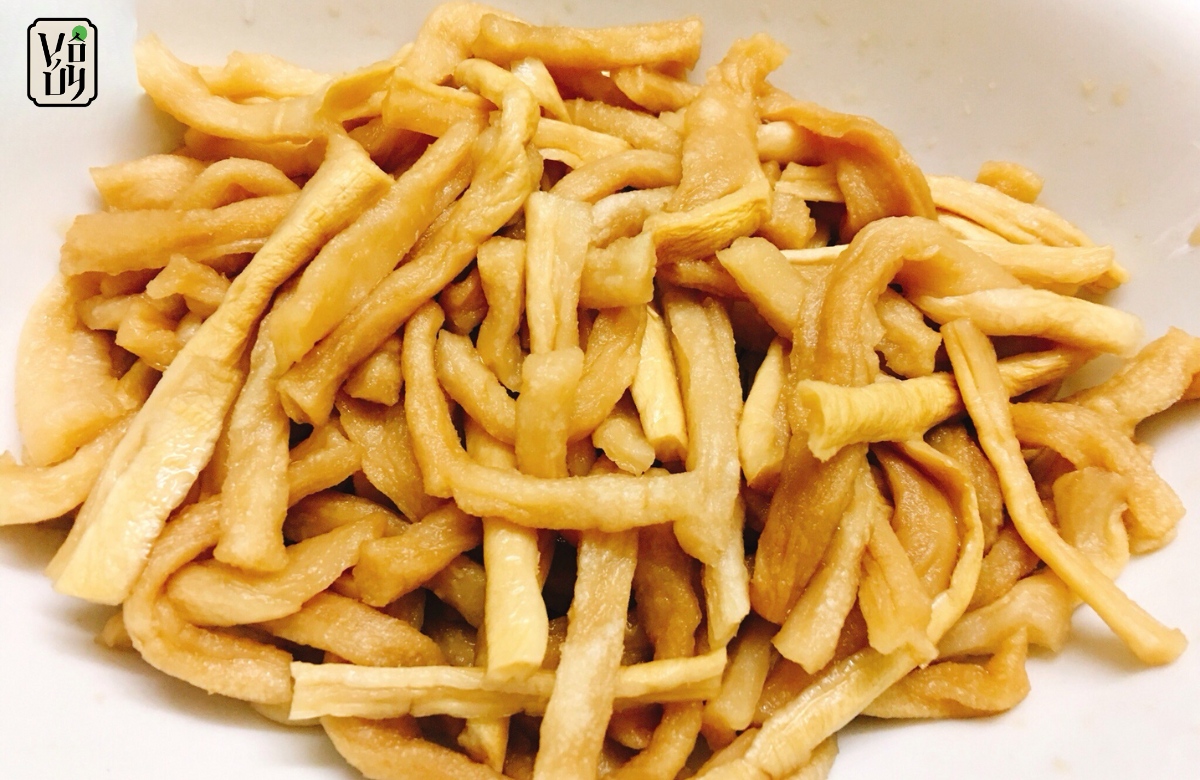
In Bac Lieu, Soc Trang, and other parts of Southern Vietnam, xa bau is often served with plain rice porridge, steamed rice, or banh tet. It may also be sliced, shredded, or finely chopped for glazing, braising, stir-frying, soups, and savoury fillings.
What is the difference between salty and sweet xa bau?
Names and preparation methods vary among families and regions, but xa bau is commonly available in two broad styles:
| Type | Main ingredients | Characteristics | Common uses |
|---|---|---|---|
| Salty xa bau | White radish and salt | Intensely salty with a relatively dry surface; needs desalting before cooking | Braising, stir-frying, glazing, soups, or savoury fillings |
| Sweet xa bau | White radish, salt, and sugar | A more balanced sweet-and-salty taste; often softer and easier to serve as a side dish | Served with porridge or rice, or used in quick dishes |
The method below makes traditional dry-salted xa bau, so sugar is not included in the ingredient list. If you want a sweet-and-salty version, use a separate tested recipe with clearly specified salt and sugar ratios and storage instructions. Do not simply add sugar to a batch that is already curing.
How to make salty xa bau at home
The traditional method requires time for wilting, salting, and drying. The actual curing period can vary with the size of the radishes, temperature, humidity, and sanitation. Because this is a home-preserved food, begin with sound produce, keep all equipment clean, and discard rather than attempt to rescue food that shows signs of spoilage.
Ingredients and equipment
- White radish or daikon: 2 kg.
- Food-grade coarse salt: 1 kg.
- A glass jar or food-safe container with a lid.
- A clean tray or drying rack.
Note on the ratio: This is an intensely salted traditional cure, not a lightly salted vegetable fermentation. The finished radish must be soaked to remove excess salt before cooking and should be eaten in small portions.
How to choose fresh white radish
Choose medium-sized radishes that feel firm and heavy, with a tapered shape, relatively smooth skin, and no unpleasant smell. Avoid radishes that are soft, badly bruised, deeply cracked, or waterlogged. Damaged produce produces poorer results and carries a greater risk of spoilage.
Step 1: Prepare and wilt the radishes
Remove the leaves, wash the radishes under clean running water, and allow them to drain thoroughly. Arrange them on a clean tray and dry them in the sun until the skin becomes slightly shrivelled and the radishes are flexible but not hard. If direct sunlight is unavailable, place them in a clean, dry, well-ventilated area. Protect the radishes from dust, insects, rain, and other sources of contamination.
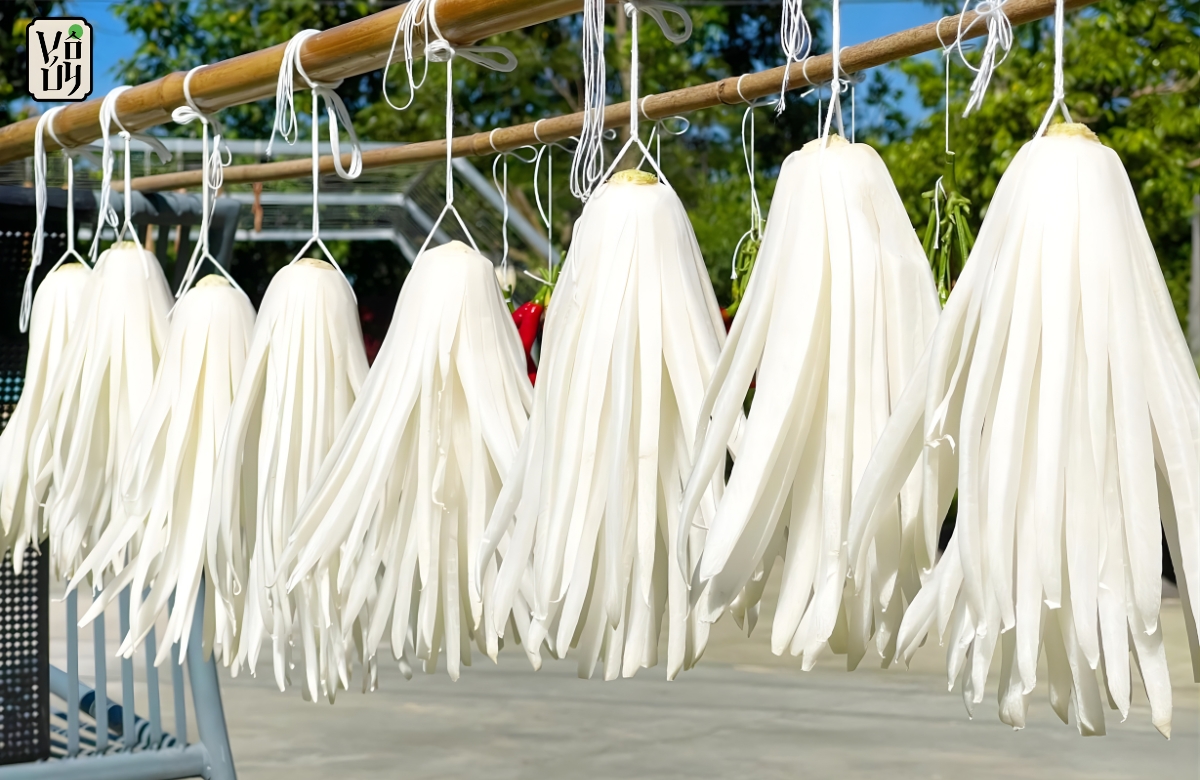
Step 2: Layer the radishes with salt
Wash the container with suitable dishwashing liquid, rinse it thoroughly, and allow it to dry. Arrange alternating layers of radish and coarse salt, finishing with a layer of salt on top. Do not use cracked containers or metal utensils that can rust or react during curing.
Step 3: Cure until the radishes are translucent and chewy
Cover the container and keep it in a dry place away from direct sunlight. The salt will draw moisture from the radishes and form a highly concentrated brine. With the traditional method, curing may take approximately three to four weeks. Do not rely on time alone; inspect the condition of the radishes throughout the process.
Properly cured radishes generally become yellowish-brown or light brown, flexible, and fragrant in the characteristic way of salted radish. Discard the questionable batch if you notice fuzzy mould, unusual slime, a rotten smell, unexpected discoloration, a bulging container, or abnormal gas release. Never taste food to determine whether a visibly spoiled batch is safe.
Step 4: Dry and store
Remove the radishes with a clean utensil and allow them to drain. Dry them in the sun for another two or three sunny days, until the surface is dry and salt crystals may appear. Transfer the xa bau to a clean, dry container, close it securely, and label it with the completion date. For homemade products that have not been tested for moisture, salinity, acidity, or microbial safety, refrigeration is the more cautious storage choice.
How to make xa bau less salty before cooking
Traditional salty xa bau should be desalted before it is added to a dish. The simplest, most controllable method is to rinse and soak it in clean water:
- Cut the xa bau into slices or shreds suitable for the recipe.
- Rinse it briefly under running water to remove salt from the surface.
- Soak it in clean water for 15–30 minutes, then change the water and taste a small piece.
- If it is still too salty, replace the water and continue soaking. Thin slices release salt more quickly than large pieces.
- Squeeze or drain the radish thoroughly before glazing, stir-frying, or braising it.
For faster desalting, blanch the sliced radish in boiling water for 30–60 seconds and then rinse it with clean water. This reduces the saltiness quickly but may soften the texture. Rice-washing water and diluted lemon juice are unnecessary: they make hygiene or flavour more difficult to control.
What can you cook with Vietnamese salted radish?
Xa bau contributes concentrated savoury flavour and a pleasantly chewy texture to many vegetarian dishes. Before seasoning, taste both the desalted radish and the soy sauce. Add further seasoning only after tasting so the finished dish does not become excessively salty.
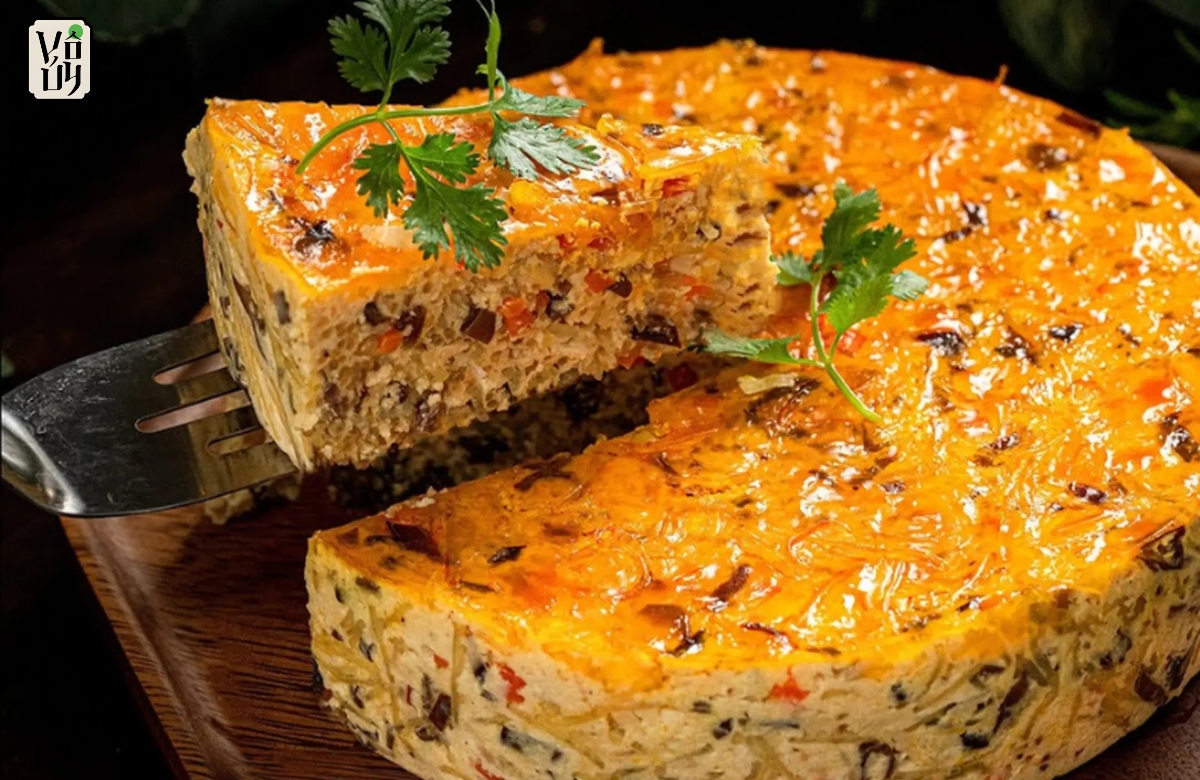
Steamed vegetarian tofu loaf with salted radish
This steamed loaf combines soft tofu, crisp wood ear mushrooms, and savoury xa bau. The recipe serves approximately three to four people.
Ingredients
- Firm white tofu: 500 g.
- Desalted xa bau, finely chopped: 80–100 g.
- Dried wood ear mushrooms: 20 g.
- Carrot: 1/2 medium carrot.
- Onion: 1/2 small onion.
- Shallot: 1, optional if you avoid the five pungent vegetables.
- Mung bean glass noodles: 30 g.
- Fermented soybean paste: 1 tablespoon.
- Soy sauce: 1–2 teaspoons, adjusted after tasting.
- Sesame oil: 1 teaspoon.
- Tapioca starch: 1–2 tablespoons.
- Ground pepper, sugar, and annatto oil: as needed.
Instructions
- Prepare the ingredients: Mash the tofu and press out excess liquid. Soak the wood ear mushrooms and glass noodles until soft. Finely chop the mushrooms and cut the noodles into short lengths. Finely chop the carrot, onion, shallot, and xa bau.
- Cook the filling: Heat a small amount of oil and sauté the shallot and carrot. Add the mushrooms and salted radish, then cook until excess moisture has evaporated. Allow the mixture to cool.
- Mix the loaf: Combine the tofu, cooked filling, noodles, soybean paste, sesame oil, and tapioca starch. Cook and taste a small portion before deciding whether to add soy sauce, sugar, or pepper.
- Steam: Press the mixture firmly into a parchment-lined mould and steam for approximately 20–25 minutes. For colour and sheen, brush the top with diluted tapioca starch and annatto oil during the final five minutes.
- Finish: Allow the loaf to cool slightly and set before slicing.
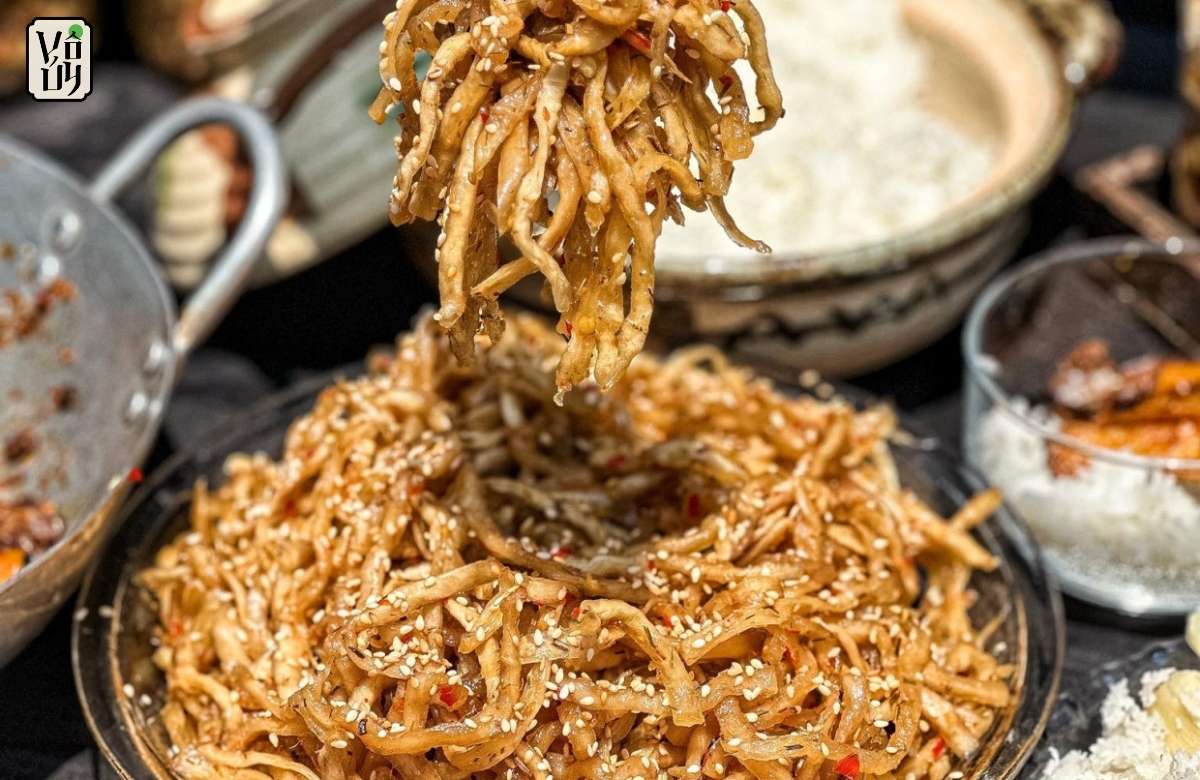
Soy-glazed vegetarian xa bau
This simple dish has a sweet-and-salty flavour and pleasantly firm strands of preserved radish. It pairs well with plain rice porridge or hot steamed rice.
Ingredients
- Shredded and desalted xa bau: 300 g.
- Sugar: 1 tablespoon.
- Soy sauce: 1–2 teaspoons.
- Annatto oil: 1 teaspoon.
- Vegetable oil: 1 tablespoon.
- Ground pepper or chilli: to taste.
Instructions
- Rinse and soak the xa bau to reduce its saltiness, then squeeze it thoroughly dry.
- Heat the vegetable oil and stir-fry the radish over medium heat until some of its remaining moisture evaporates.
- Add the sugar, annatto oil, and part of the soy sauce. Cook over low heat, stirring regularly, until the seasoning coats the firm radish strands.
- Taste before adding more soy sauce. Do not add salt if the dish is already sufficiently seasoned.
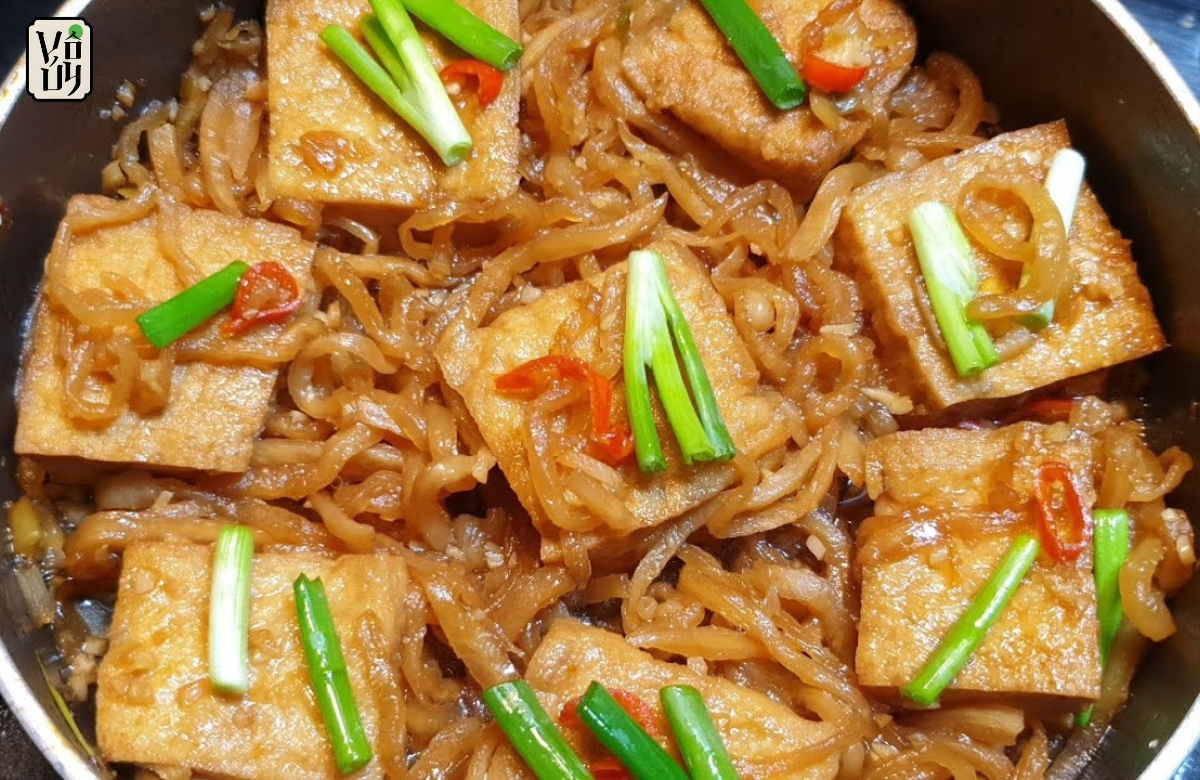
Vegetarian braised tofu with salted radish
The intense flavour of xa bau works well with soft tofu and mushrooms in this simple dish served with rice.
Ingredients
- Tofu: 2 blocks.
- Desalted xa bau: 100–120 g.
- Grey oyster mushrooms: 200 g.
- Finely chopped leek: 1 teaspoon, optional if you avoid the five pungent vegetables.
- Soy sauce, sugar, ground pepper, and vegetable oil: as needed.
- Water or vegetable stock: approximately 150 ml.
Instructions
- Slice and soak the xa bau to remove excess salt, then squeeze it dry. Cut the tofu into bite-sized pieces. Clean and tear the mushrooms into strips.
- Pan-fry the tofu until lightly golden. Sauté the leek, if using, then briefly stir-fry the salted radish and mushrooms.
- Add the tofu and water or vegetable stock. Season with a small amount of soy sauce and sugar, then simmer over low heat for 8–10 minutes.
- Taste, adjust the seasoning, and finish with ground pepper.
Is it healthy to eat a lot of salted radish?
Xa bau is a high-salt food and is best used as a condiment or flavouring ingredient rather than eaten in large portions. Rinsing and soaking can remove some of the salt from the surface and the radish itself, but the remaining sodium cannot be measured accurately without nutritional analysis.
The World Health Organization recommends that adults consume less than 2,000 mg of sodium per day, equivalent to less than 5 g of salt. People with high blood pressure, heart disease, kidney disease, or a medically prescribed low-sodium diet should ask a doctor or registered dietitian about an appropriate serving size. Remember to include sodium from soy sauce, seasoning powders, and other foods eaten throughout the day.
How to store homemade xa bau
- Place the dried salted radish in a clean, dry container with a secure lid and label it with the completion date.
- Use clean, dry chopsticks or a spoon. Never return leftovers or a used utensil to the container.
- Refrigerate the radish, particularly after opening or when it has been made at home without controls for moisture, salinity, acidity, or microbial safety.
- There is no single reliable shelf life for every homemade batch. Inspect it each time and discard it if you see mould, slime, unexpected discoloration, a bulging container, or notice a rotten smell.
- Never taste food that shows signs of spoilage to decide whether it is safe.
Frequently asked questions about xa bau
Are xa bau and salted radish the same thing?
In common Southern Vietnamese usage, xa bau or xa pau refers to a form of salt-preserved white radish. However, “salted radish” is a broader term that can describe salty, sweet-and-salty, vinegar-pickled, and culturally distinct preserved-radish recipes.
Why is the radish wilted before salting?
Sun-drying or air-drying removes some moisture, shrivels the skin, and makes the radish more flexible. This helps prevent breakage and allows the salt to penetrate during curing.
Can mouldy xa bau be washed and eaten?
No. If the radish develops fuzzy mould, especially with slime, a rotten smell, or unusual discoloration, the safer choice is to discard the questionable food rather than wash only the surface and continue using it.
How long should xa bau be soaked to reduce the saltiness?
For sliced or shredded xa bau, begin with 15–30 minutes in clean water, then replace the water and taste again. The required time depends on the original salt level, thickness of the pieces, and intended dish, so do not rely on a fixed soaking time without checking.
Can xa bau dishes be made without onions or garlic?
Yes. Onions, leeks, shallots, and garlic are optional aromatic ingredients in these recipes. Depending on the dish and your dietary practice, you can replace them with ginger, lemongrass, pepper, chilli, toasted sesame, or mushrooms.
Enjoy vegetarian food at Vo Uy Vegetarian Restaurant
For more ideas on combining traditional ingredients in plant-based meals, read our guide to a healthy vegetarian diet or explore the vegetarian menu at Vo Uy. If you need a low-sodium meal, avoid onions and garlic, or have another dietary requirement, tell the staff before ordering so the ingredients and available adjustments can be checked.
Conclusion
Vietnamese salted radish, or xa bau, is an intensely savoury ingredient with a chewy texture and close links to Teochew food culture and Southern Vietnamese family cooking. It can be soy-glazed, braised with tofu, added to a steamed vegetarian loaf, or served with plain rice porridge.
When making xa bau at home, first determine whether you are preparing the salty or sweet version, keep all equipment clean, and monitor the batch for signs of spoilage. Before cooking, remove excess salt, taste before adding further seasoning, and use the preserved radish in moderation to manage the total salt in your diet.