


 0902 353 527
  cskh@nhahangvouy.com

2 Ways to Make Vegan Savory Sticky Rice at Home
Vegan savory sticky rice combines soft, fragrant glutinous rice with mushrooms, vegan sausage, mushroom floss, vegan pâté, pickled vegetables and a flavorful sauce. This dish is suitable for breakfast, vegetarian days or whenever you want to prepare something different for your family. Below are two ways to make vegan savory sticky rice using a steamer or rice cooker, along with topping recipes and tips to keep the rice evenly cooked rather than soggy.
Recipe information:
- Servings: Approximately 4.
- Soaking time: 6–8 hours.
- Preparation time: Approximately 30 minutes.
- Cooking time: Approximately 40–60 minutes.
- Expected result: Soft but relatively dry sticky rice, fragrant toppings without excess liquid and a balanced savory-sweet flavor.
What is vegan savory sticky rice?
Vegan savory sticky rice, known as xôi mặn chay in Vietnamese, is a plant-based version of traditional Vietnamese savory sticky rice. It usually consists of white glutinous rice served with mushrooms, vegan steamed sausage, mushroom floss, vegan pâté, roasted peanuts, fresh herbs and pickled vegetables.
The word “savory” distinguishes this dish from sweet sticky rice varieties such as mung bean sticky rice, purple sticky rice and red gac sticky rice with coconut milk. It describes the seasonings and toppings rather than the use of meat or fish.
A Saigon-style serving commonly combines the saltiness of the sauce, the richness of vegan pâté, the natural sweetness of mushrooms and the mild acidity of pickled carrot and daikon. Vietnamese coriander, roasted peanuts and vegan chili satay add extra aroma, texture and gentle heat.
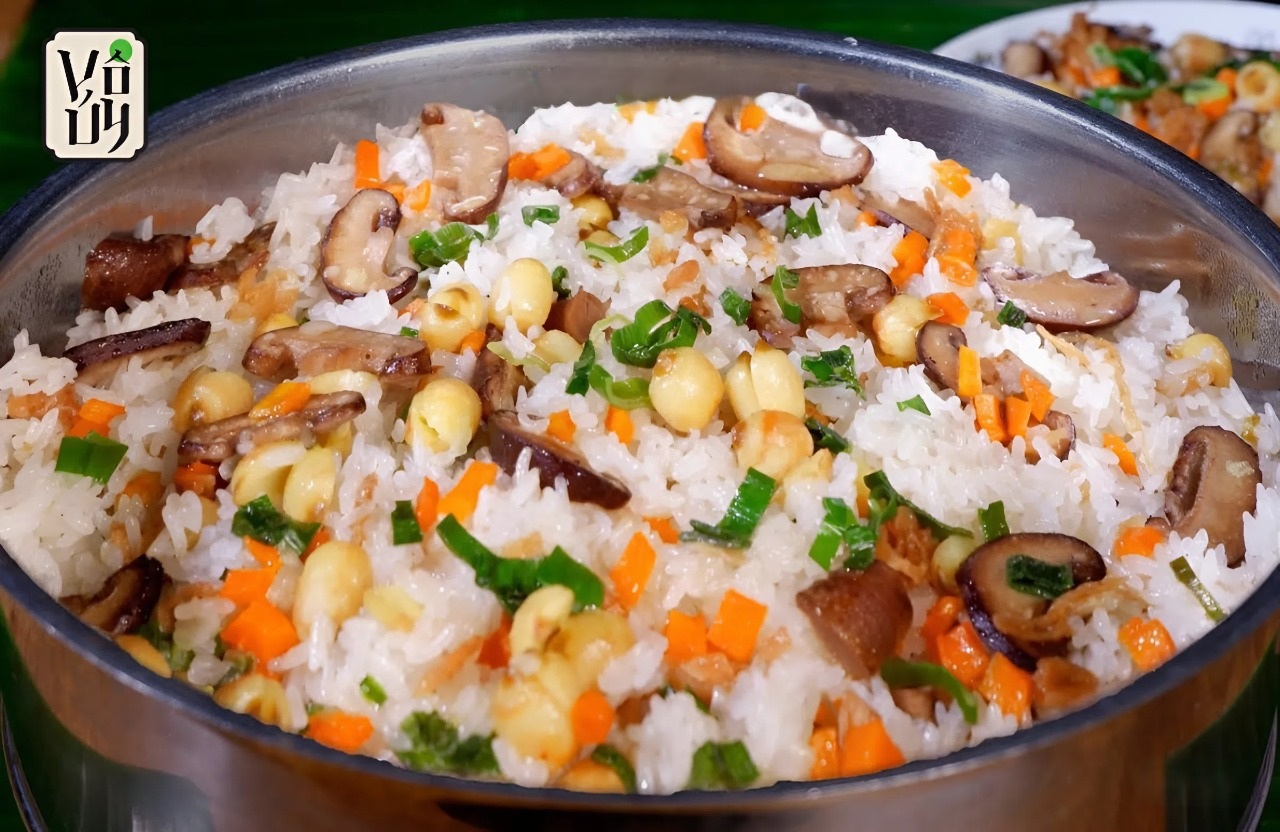
Vegan savory sticky rice is a flavorful Vietnamese breakfast dish
How is vegan savory sticky rice different from vegan mixed sticky rice?
These two dishes may share several ingredients, but they differ in their combinations and dominant flavors.
| Criteria | Vegan savory sticky rice | Vegan mixed sticky rice |
|---|---|---|
| Sticky rice base | Mainly plain white sticky rice | May be mixed with vegetables, seeds or coconut milk |
| Toppings | Vegan sausage, pâté, mushroom floss and pickled vegetables | Mushrooms, vegetables, lotus seeds, beans and vegan sausage |
| Flavor | Rich, savory and sometimes slightly spicy | Lighter, highlighting the natural sweetness of vegetables |
| How it is served | Breakfast or a quick meal | Main meal, ceremonial feast or vegetarian party |
Ingredients for vegan savory sticky rice
The quantities below make approximately four servings. You can adjust the toppings according to your preferences, but it is best to retain the suggested amounts of glutinous rice and liquid when making the recipe for the first time.
Ingredients for the sticky rice
- Glutinous rice: 500 g.
- Salt: 1/2 teaspoon.
- Cooking oil: 1 tablespoon.
- Coconut milk: 50 ml, optional.
Ingredients for the toppings
- Fresh shiitake mushrooms: 100 g.
- King oyster mushrooms: 100 g.
- Vegan steamed sausage: 100 g.
- Mushroom floss or another vegan floss: 50 g.
- Vegan pâté: 100 g.
- Roasted peanuts: 30 g.
- Leek: 1 stalk.
- Vietnamese coriander, cilantro and vegan chili satay: as needed.
If you want to prepare the toppings yourself, explore the popular types of vegan sausage and how to make them. To reduce processed plant-based foods, replace the sausage and pâté with pan-fried tofu, lotus seeds or additional mushrooms.
Ingredients for the pickled vegetables
- Small carrot: 1.
- Daikon radish: 1/2.
- Vinegar: 3 tablespoons.
- Sugar: 2 tablespoons.
- Salt: 1/2 teaspoon.
Ingredients for the sauce
- Soy sauce: 3 tablespoons.
- Vegan oyster sauce: 1 tablespoon.
- Sugar: 1 teaspoon.
- Vegan seasoning powder: 1/2 teaspoon.
- Filtered water or strained mushroom-soaking liquid: 80 ml.
- Ground black pepper: as needed.
Note: Check the labels of the vegan sausage, pâté, oyster sauce and seasoning powder if you want the finished dish to be fully vegan. Some products labelled “vegetarian” may still contain eggs, dairy or other ingredients that do not suit every plant-based diet.
How to prepare the ingredients
Choose, soak and drain the glutinous rice
Choose glutinous rice with plump, evenly sized grains, a naturally opaque white color and no musty smell. Vietnamese waxy glutinous rice provides a particularly soft texture, while nếp cái hoa vàng is valued for its distinctive fragrance.
Gently rinse the rice about twice and soak it in cool water for 6–8 hours. After soaking, rinse it once more and drain it thoroughly for 20–30 minutes. Excess water can cause the sticky rice to become soggy or clump together during steaming.
Prepare the mushrooms and vegan sausage
Quickly rinse the fresh mushrooms and allow them to drain. Slice the shiitake mushrooms and cut the king oyster mushrooms into strips or small cubes. Avoid soaking fresh mushrooms for too long because they can absorb water and release excessive moisture during cooking.
Cut the vegan sausage into strips or small cubes. Pan-fry it until the surface becomes lightly golden to improve its aroma and give the topping a more appealing texture.
Prepare the pickled vegetables
Peel the carrot and daikon, then cut them into thin strips. Mix them with salt, leave them for approximately 10 minutes and gently squeeze out the excess liquid.
Dissolve the sugar in the vinegar, then add the vegetables and pickle them for at least 30 minutes. Their light sweet-and-sour flavor helps balance the richness of the vegan pâté, peanuts and fried leek oil.
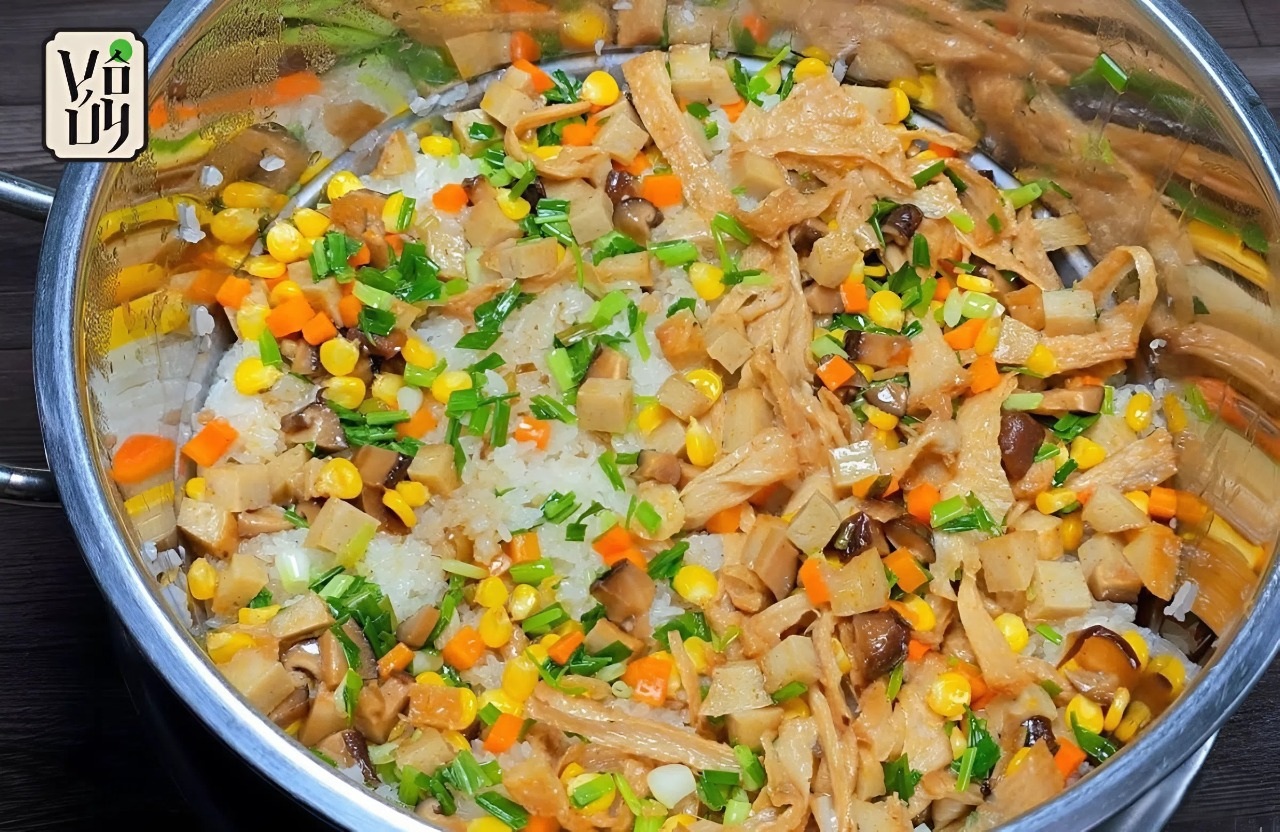
Properly soaking and draining the rice helps it cook evenly without becoming soggy
Two ways to make vegan savory sticky rice
Method 1: Cook vegan savory sticky rice in a steamer
Steaming cooks the glutinous rice with hot vapor, helping the finished grains remain soft, chewy and relatively dry. This method also gives you greater control over the moisture level.
Step 1: Season the rice
Mix the drained glutinous rice with 1/2 teaspoon of salt and 1 tablespoon of cooking oil. The oil gives the grains an attractive shine and helps prevent them from forming large clumps. If using coconut milk, do not add all of it at this stage.
Step 2: Steam the rice for the first time
Bring the water to a boil before placing the steamer basket over the pot. The water should not touch the bottom of the basket.
Add the rice and spread it into a relatively even layer without pressing it down. Use chopsticks to make several small holes so the steam can circulate more effectively.
Wrap the lid with a clean kitchen towel to prevent condensed water from dripping onto the rice. Cover and steam for approximately 20–25 minutes.
Step 3: Fluff the rice and check the moisture
Remove the lid and gently fluff the rice from the bottom upward. If the grains still seem dry, drizzle warm water or coconut milk over the surface one spoonful at a time.
Do not pour a large amount of liquid into one area because the outside may become mushy while the center remains undercooked.
Step 4: Steam the rice for the second time
Continue steaming for another 10–15 minutes. The rice is ready when the grains are evenly expanded, soft and chewy with no hard white centers.
Turn off the heat, fluff the rice and allow it to rest for approximately five minutes before serving.
Method 2: Cook vegan savory sticky rice in a rice cooker
This method is convenient, requires fewer utensils and works well when you only need to prepare a moderate amount of sticky rice.
Step 1: Add the rice and water
Place the soaked and thoroughly drained glutinous rice in the rice cooker. Add just enough water to reach the surface of the rice. Do not use the same water ratio as regular rice because soaked glutinous rice already contains a considerable amount of moisture.
When making it for the first time, begin with less water and add more later if necessary. The exact amount can vary depending on the rice variety and rice cooker.
Step 2: Cook and fluff the rice
Start the normal cooking cycle. When the cooker switches to “Keep Warm,” open the lid and fluff the rice evenly.
If the grains are still firm, drizzle in warm water one spoonful at a time, close the lid and start another cooking cycle.
Step 3: Rest the sticky rice
Once the rice is fully cooked, leave it on “Keep Warm” for 5–10 minutes before unplugging the cooker. Avoid keeping it warm for too long because the bottom layer may dry out or burn.
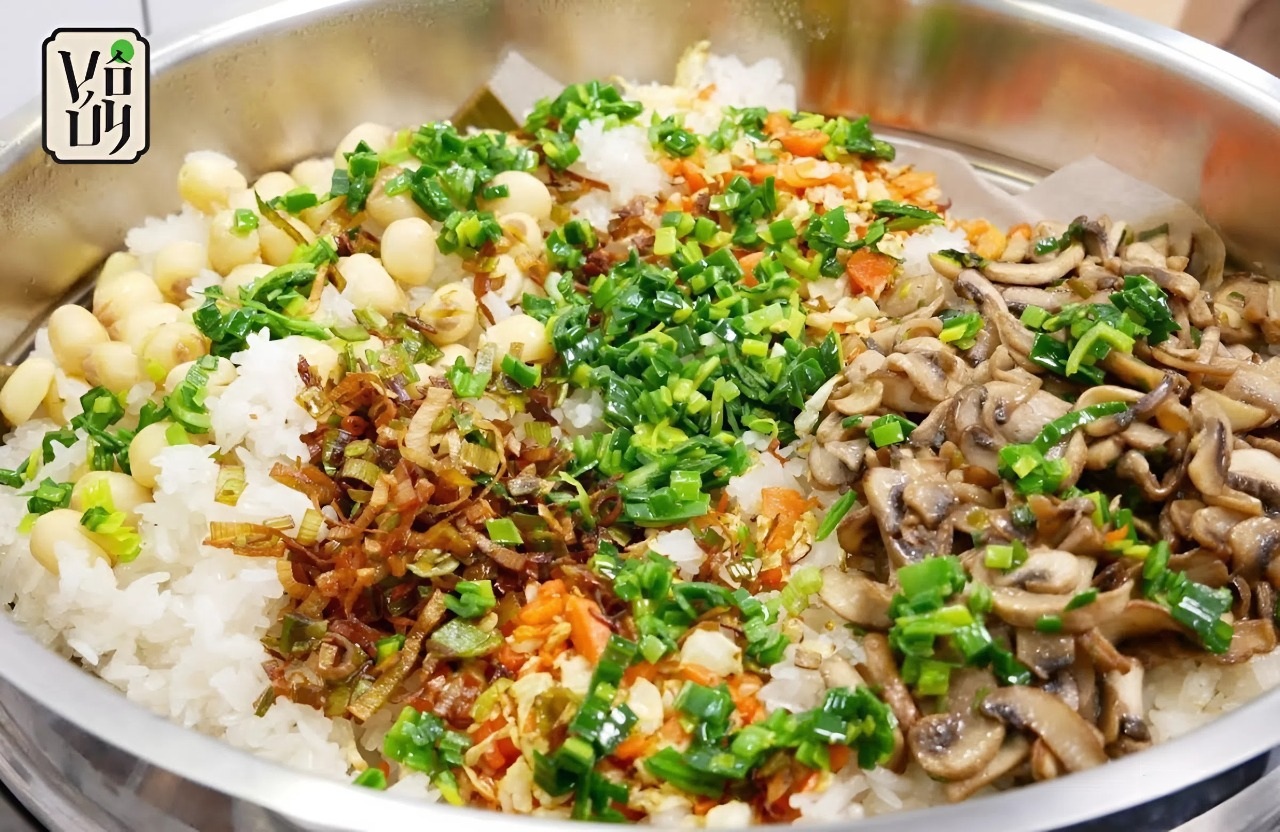
A rice cooker is a convenient alternative when you do not have a steamer
How to make the toppings and sauce
Stir-fry the mushrooms and vegan sausage
Heat a small amount of oil in a pan and sauté the finely chopped leek until fragrant. When it becomes light golden, remove half and reserve it for garnishing.
Add the shiitake and king oyster mushrooms, then stir-fry them over high heat so they firm up quickly and release less liquid. Season with a small amount of soy sauce, vegan seasoning powder and ground pepper.
Continue cooking until the mushrooms are tender and most of the liquid has evaporated. Add the vegan sausage and stir-fry for another two minutes.
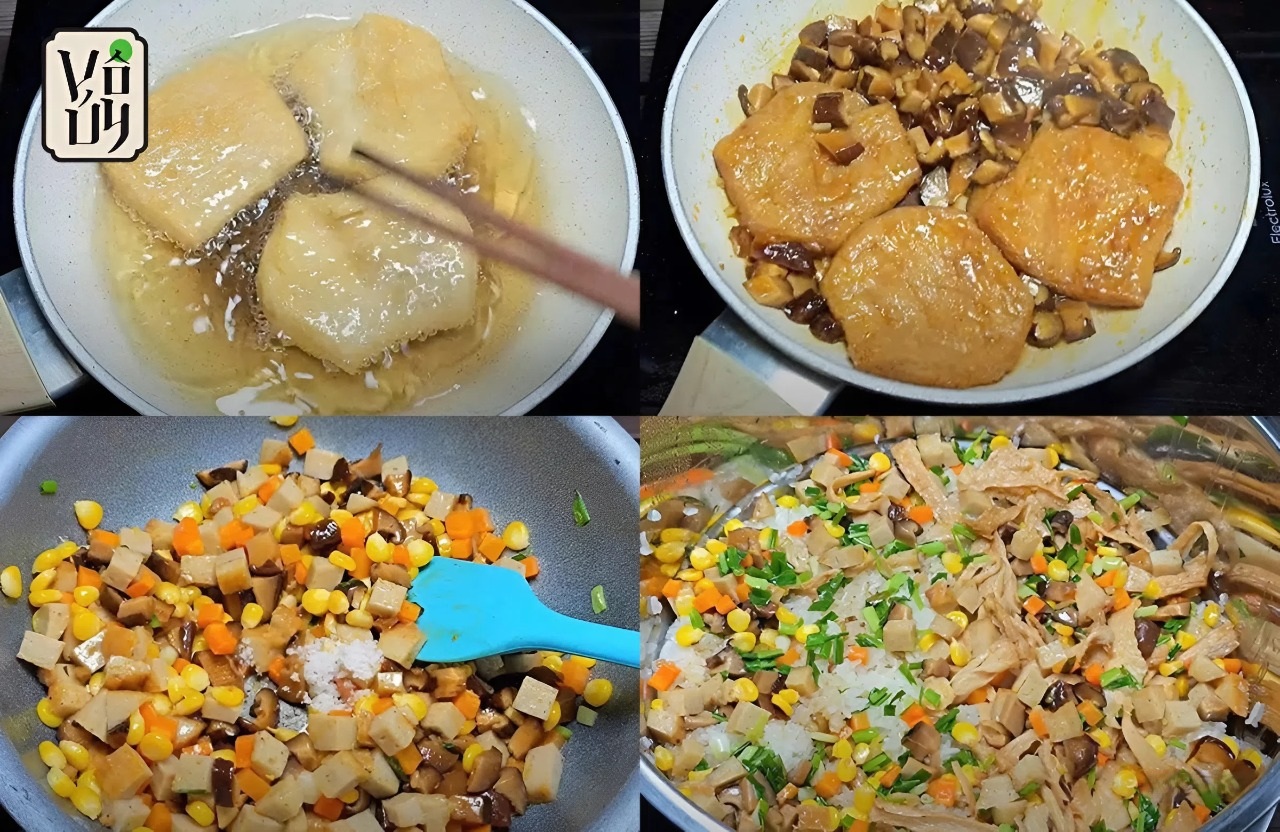
Stir-fry the toppings until relatively dry before placing them on the sticky rice
Make simple mushroom floss
Soak dried shiitake mushroom stems until soft, rinse them thoroughly and boil them for approximately 15 minutes. Let them cool, squeeze out as much water as possible and shred them into thin strands.
Place the mushrooms in a pan and season them with soy sauce, vegan seasoning powder and a little pepper. Cook over low heat until they become dry, fluffy and golden brown. Mushroom floss can be prepared in advance and stored in an airtight container.
Cook the savory sauce
Add the soy sauce, vegan oyster sauce, sugar, seasoning powder and 80 ml of water to a small saucepan. Stir well and cook over low heat for approximately 2–3 minutes.
The finished sauce should be slightly thickened but still fluid enough to drizzle. If it is too salty, add filtered water or mushroom liquid and bring it back to a simmer. For extra heat, add vegan chili satay after turning off the stove.
Assemble and serve
Place the hot sticky rice on a plate or in a serving box. Arrange the mushrooms, vegan sausage, vegan pâté and mushroom floss on top. Add roasted peanuts, fried leek, Vietnamese coriander and pickled vegetables.
Drizzle the sauce over the sticky rice immediately before serving so that the grains do not become soggy.
Signs of a successful result: The glutinous rice should be soft and plump with no hard white centers. The mushroom toppings should be fragrant, well-seasoned and free from excess moisture. The sauce should have a balanced savory-sweet flavor, while the pickled vegetables should remain crisp.
Tips and common cooking problems
- The sticky rice is undercooked: Fluff it, drizzle in a small amount of warm water and steam for another 5–10 minutes. Do not pour too much water into one spot.
- The sticky rice is too mushy: Spread it into a thin layer in the steamer and steam it again without adding water so the excess moisture can escape.
- The sticky rice is too dry: Cover it with a damp cloth and steam it briefly. If using a microwave, place a damp paper towel over the container.
- The mushrooms release too much liquid: Drain them thoroughly, use a wide pan and stir-fry them over high heat. Avoid overcrowding the pan.
- The sauce is too salty: Add water or mushroom liquid and bring it back to a simmer. Adding sugar alone will not properly correct an overly salty sauce.
- The assembled sticky rice quickly becomes soggy: Store the sticky rice, toppings, pickles and sauce separately, then combine them immediately before serving.
Vegan savory sticky rice variations
- Saigon-style vegan savory sticky rice: Combine vegan pâté, steamed vegan sausage, mushroom floss, peanuts, pickled vegetables, Vietnamese coriander and chili satay.
- Vegan mushroom sticky rice: Add more shiitake, king oyster or oyster mushrooms while reducing processed vegan products. See the vegan mushroom sticky rice recipe for more mushroom preparation tips.
- Vegan mixed sticky rice: Add carrots, green beans, sweet corn, lotus seeds or beans for more color and texture.
- Version without the five pungent spices: Leave out onions, garlic and leek. Use mushrooms, toasted sesame seeds, sesame oil and pepper for additional aroma.
For more cooking methods and flavor ideas, explore these 3 easy vegan sticky rice recipes.
How many calories are in vegan savory sticky rice?
The calorie content varies according to the serving size and toppings. Based on the quantities in this recipe, one serving may provide approximately 550–750 kcal. This is only a general estimate rather than a fixed nutritional value.
Glutinous rice provides most of the energy. Cooking oil, coconut milk, vegan pâté, sausage, mushroom floss and peanuts can significantly increase the total calorie content.
For a more accurate calculation, check the nutritional labels of the products used, calculate the total energy of all ingredients and divide it by the number of servings.
For a lighter version, reduce the sticky rice, oil, pâté and mushroom floss while adding more mushrooms and pickled vegetables. The appropriate serving size depends on each person’s nutritional needs and overall diet.
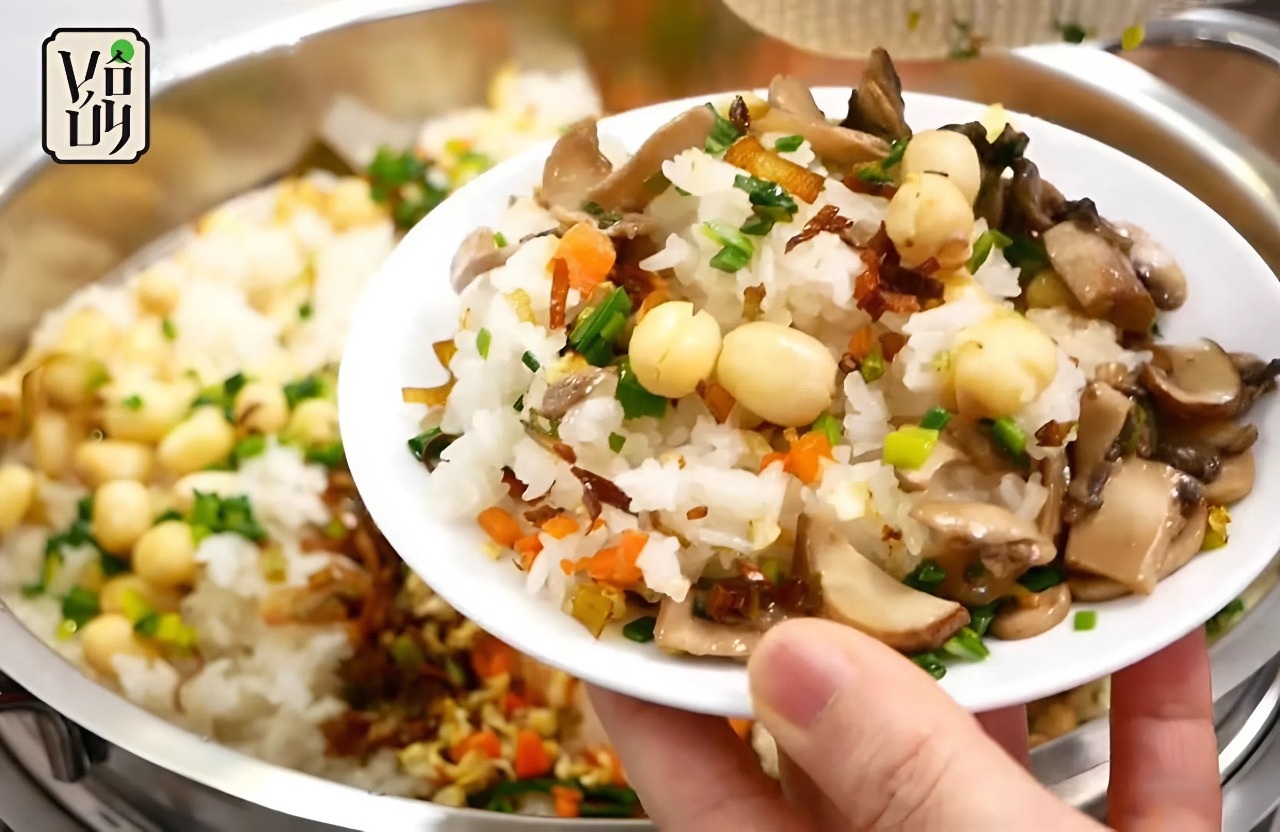
The calorie content of vegan savory sticky rice varies by serving size and toppings
How to store and reheat vegan savory sticky rice
Store the sticky rice, toppings, sauce, pickled vegetables and fresh herbs separately. Allow the food to cool slightly, place each component in an airtight container and refrigerate it. Avoid leaving sticky rice and toppings at room temperature for extended periods, especially in hot weather.
When ready to eat, steam the sticky rice until evenly heated or microwave it with a damp paper towel placed over the container. Reheat the mushroom and vegan sausage toppings separately.
Add the sauce, pickled vegetables, fresh herbs and peanuts only after reheating to preserve the texture of each component.
Enjoy vegetarian cuisine at Vô Úy Restaurant
If you do not have much time to cook, explore more options on the Vô Úy vegetarian menu. The restaurant offers a calm and welcoming setting suitable for family meals, friendly gatherings and vegetarian days.
Call 0902 353 527 or reserve a table at Vô Úy Vegetarian Restaurant to arrange a convenient dining time.
Frequently asked questions about vegan savory sticky rice
Do I have to soak glutinous rice overnight?
No. You can soak the glutinous rice in cool water for approximately 6–8 hours. Soaking it overnight is simply more convenient when you plan to cook the sticky rice in the morning.
Which mushrooms are best for vegan savory sticky rice?
Shiitake, king oyster, oyster and button mushrooms are all suitable. Shiitake mushrooms provide a distinctive aroma, while king oyster and oyster mushrooms add a pleasantly chewy texture.
Can I make the dish without vegan sausage?
Yes. Replace the vegan sausage with pan-fried tofu, stir-fried mushrooms, lotus seeds or beans. These alternatives also help reduce the amount of processed plant-based food in the dish.
Is vegan savory sticky rice always fully vegan?
It is only fully vegan when all ingredients, seasonings and toppings contain no animal-derived components. Check the labels of vegan sausage, pâté, oyster sauce and seasoning powder before using them.
Should vegan savory sticky rice be served with soy sauce or vegan fish sauce?
Both can be used. Soy sauce offers a milder aroma, while vegan fish sauce usually has a stronger flavor. Choose according to your preferences and the seasoning already used in the toppings.
Can I prepare the sticky rice the night before?
Yes. You can cook the sticky rice and prepare the toppings the night before, but they should be refrigerated separately. Reheat each component before adding the sauce, pickled vegetables, fresh herbs and peanuts.
Conclusion
Making vegan savory sticky rice is not overly complicated, but controlling the moisture in the glutinous rice and mushrooms is essential. When the rice is soaked long enough, the toppings are stir-fried until relatively dry and the sauce is added only before serving, the finished dish will be soft, fragrant and flavorful without becoming soggy. Choose a steamer for drier, more separate grains or use a rice cooker when you want a quicker and more convenient method.