

 0902 353 527
  cskh@nhahangvouy.com

How to Make Delicious Vegetarian Bún Đậu Mắm Tôm at Home
Vegetarian bún đậu mắm tôm is a lighter, plant-based version of the familiar Vietnamese street food while remaining rich and flavorful. A complete platter usually includes pressed rice vermicelli, fried tofu, vegetarian green rice patties, mushrooms, fresh herbs, and a bowl of balanced sweet, sour, and spicy vegetarian shrimp paste dipping sauce. In this article, Vô Úy Vegetarian Restaurant will show you how to make vegetarian bún đậu mắm tôm at home using easy-to-find ingredients and simple steps.
What Is Vegetarian Bún Đậu Mắm Tôm?
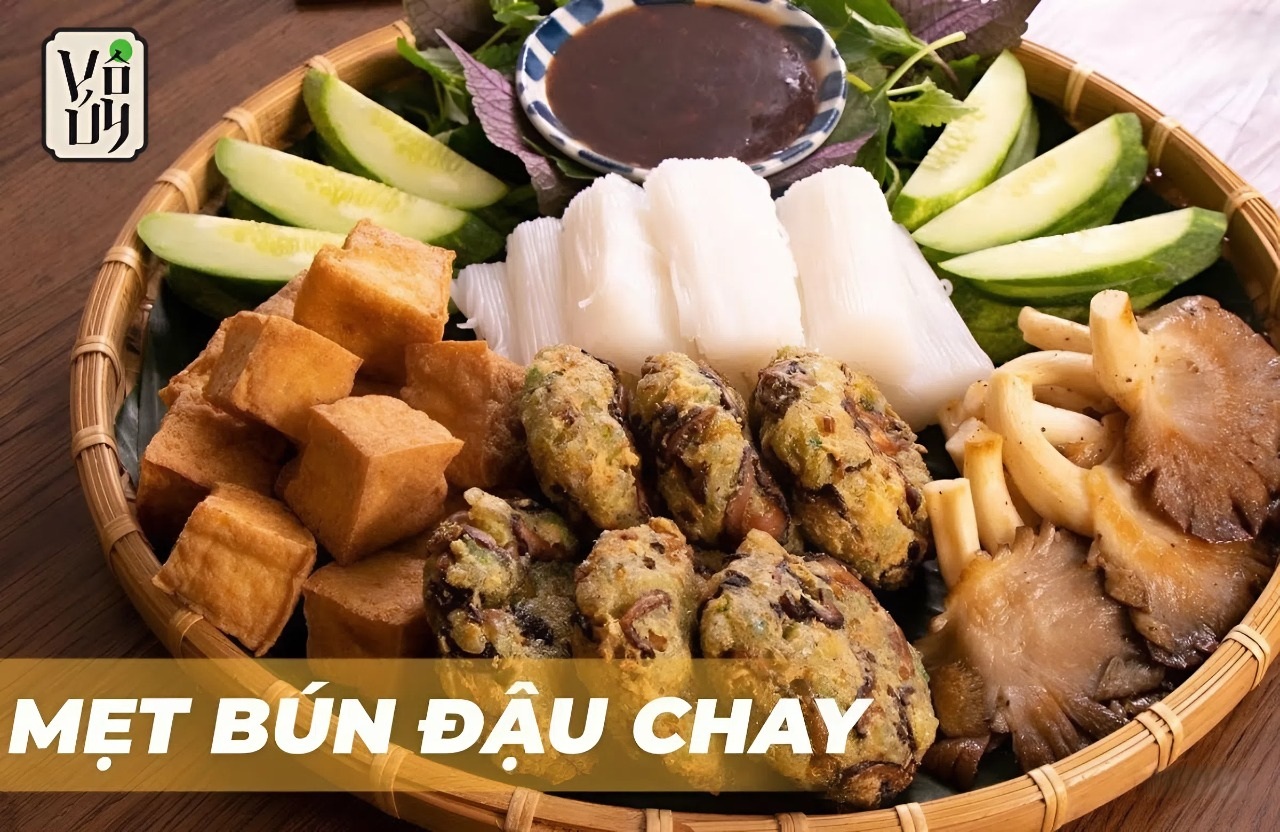
Vegetarian bún đậu mắm tôm is made with plant-based ingredients that replace the meat, sausage, and traditional shrimp paste used in the original dish. Its basic components include fresh rice vermicelli, tofu, mushrooms, vegetarian green rice patties, fresh herbs, and a dipping sauce made from fermented tofu, fermented soybean paste, or vegetarian soybean sauce.
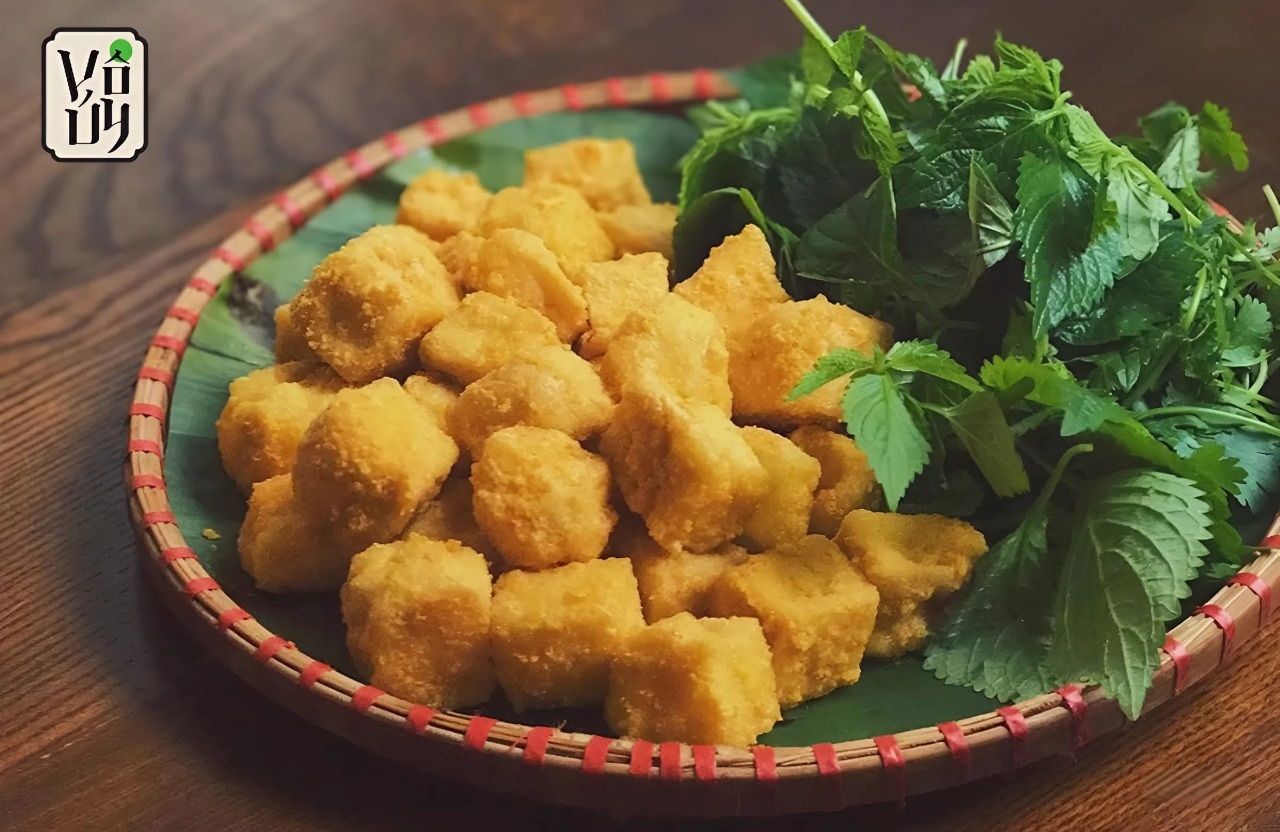
The dish combines a variety of flavors and textures. The noodles are soft, the tofu is crispy on the outside and rich and tender on the inside, the mushrooms are chewy, and the herbs add freshness. The dipping sauce brings all the components together.
What Is Vegetarian Bún Đậu Mắm Tôm?
What Is Vegetarian Shrimp Paste Made From?
Vegetarian shrimp paste does not contain shrimp. It is the name given to a plant-based dipping sauce prepared to resemble the color, consistency, and flavor of traditional Vietnamese fermented shrimp paste.
Common ingredients used to make vegetarian shrimp paste include:
- White fermented tofu
- Fermented whole soybean paste
- Fermented soybeans
- Straw mushrooms
- Vegetarian soybean sauce
- Sugar, lime, chili, and hot cooking oil
Each recipe creates a different flavor. A dipping sauce made with fermented tofu usually has a rich taste and distinctive fermented aroma. Recipes that include mushrooms and fermented whole soybean paste generally have more natural sweetness, a mild fragrance, and a thicker consistency.
If you buy bottled vegetarian shrimp paste, carefully check the ingredients on the label. This helps ensure that the product is suitable for the type of vegetarian diet you follow.
How Is Vegetarian Bún Đậu Different from the Traditional Version?
Traditional bún đậu is served with boiled pork, green rice sausage, fried spring rolls, pork offal, and fermented shrimp paste. Vegetarian bún đậu replaces these ingredients with tofu, mushrooms, tofu skin, vegetarian Vietnamese pork sausage, or plant-based ribs.
Vegetarian green rice patties can be made with tofu, taro, mushrooms, and flattened green rice flakes. Traditional shrimp paste is replaced with a dipping sauce made from fermented tofu, fermented whole soybean paste, or vegetarian soybean sauce. Fresh herbs, pressed rice vermicelli, cucumber, star fruit, and pickled baby eggplants can still be served as usual.
Ingredients for Vegetarian Bún Đậu Mắm Tôm
The following recipe serves approximately three to four people. You can reduce or increase the quantities according to the number of servings required.
Ingredients for the Vegetarian Bún Đậu Platter
- 600g pressed rice vermicelli or fresh rice vermicelli
- 4 pieces of white tofu
- 200g oyster mushrooms
- 150g vegetarian Vietnamese pork sausage
- 100g fresh tofu skin
- 4 pieces of dried plant-based ribs
- 1 cucumber
- 1 sour star fruit
- A small amount of pickled baby eggplants
- Fresh herbs and vegetables, including perilla, Vietnamese balm, fish mint, coriander, and lettuce
- Soy sauce, vegetarian seasoning, pepper, and cooking oil
Ingredients for Vegetarian Green Rice Patties
- 150g taro
- 1 piece of white tofu
- 50g flattened green rice flakes
- 30g shiitake mushrooms or wood ear mushrooms
- 1 tablespoon tapioca starch
- 1 teaspoon vegetarian seasoning
- A small amount of ground pepper
Ingredients for Vegetarian Shrimp Paste Dipping Sauce
- 5 cubes of white fermented tofu
- 1 tablespoon fermented whole soybean paste
- 1½ tablespoons sugar
- 1 tablespoon lime or calamansi juice
- 1–2 tablespoons warm water
- 1 tablespoon hot cooking oil
- Chopped chili to taste
The saltiness of fermented tofu and soybean paste varies between brands. Add the ingredients gradually, stir well, and taste the sauce before making further adjustments.
How to Choose Fresh Ingredients for Vegetarian Bún Đậu Mắm Tôm
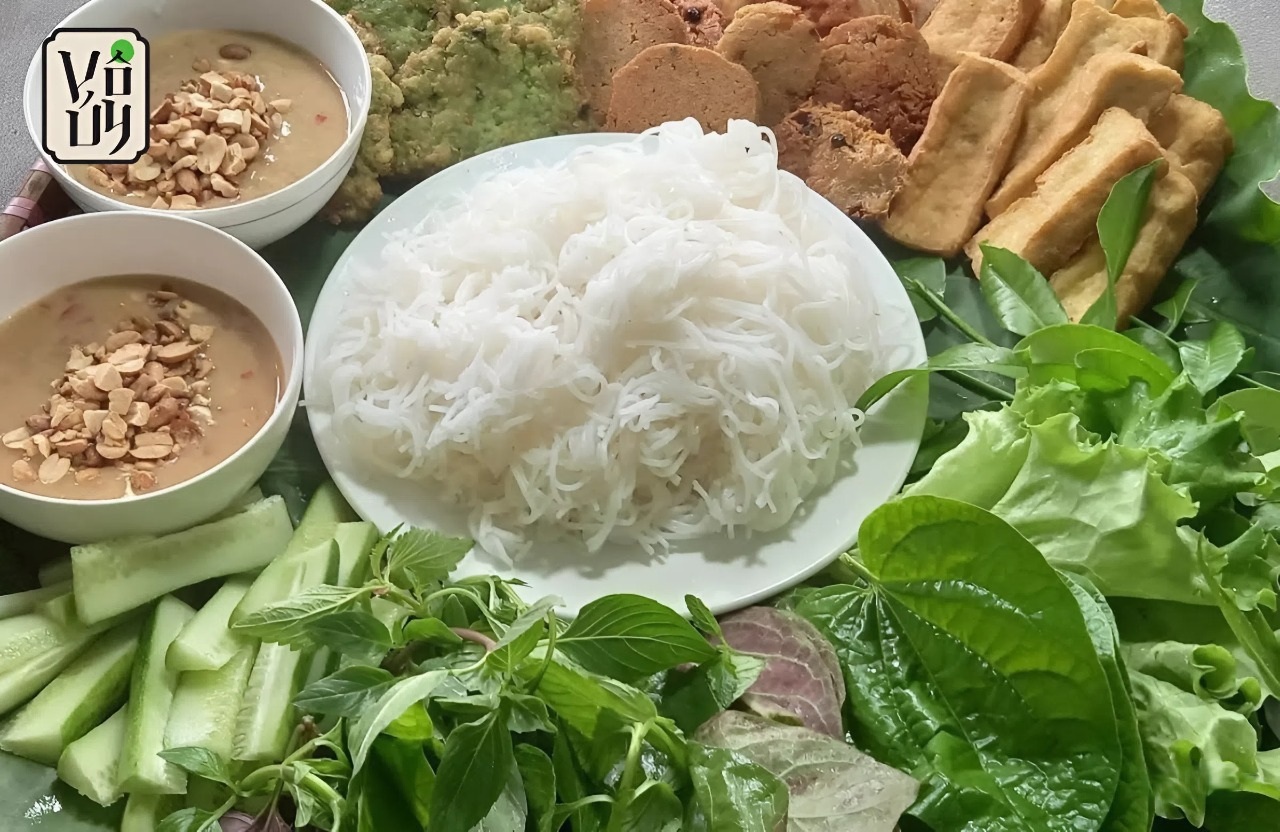
Fresh ingredients help create a well-balanced platter and ensure the dish’s overall quality. Carefully inspect the rice vermicelli, tofu, mushrooms, and fresh vegetables before cooking.
How to Choose Fresh Rice Vermicelli
Good-quality fresh rice vermicelli usually has a natural white color and soft strands that are not mushy. It should not have a strong sour smell, a slimy surface, or unusual clumps. Buy the noodles from a trusted supplier and consume them on the same day.
If pressed rice vermicelli is unavailable, you can use loose rice vermicelli. Roll or gently press it into small portions to make it easier to pick up.
How to Choose Tofu
Tofu suitable for frying usually has an ivory-white color, a smooth surface, and no sour smell. It should be moderately soft but firm enough to remain intact when cut. Avoid tofu with a slimy surface, dark-yellow color, or unusual smell.
Tofu that is too firm may not develop the ideal combination of a crispy exterior and a soft, rich interior.
How to Choose Mushrooms and Fresh Vegetables
Fresh oyster mushrooms usually have a natural color, firm stems, and no slime. Avoid mushrooms with an unusual smell, darkened caps, or excessive moisture on their surface.
The accompanying vegetables and herbs should have a fresh color, intact leaves, and no signs of wilting or water damage. After washing them, drain them thoroughly before arranging them on the platter. Excess water on the vegetables can quickly soften the fried tofu and affect the dish’s overall flavor.
Notes on Buying Processed Vegetarian Food
Vegetarian Vietnamese pork sausage, plant-based ribs, and tofu skin can reduce preparation time. However, choose products with clear labels, origins, and expiration dates.
People with allergies to soybeans, wheat, or gluten should carefully read the ingredient list. Many types of vegetarian sausage and plant-based ribs are made from soy protein, wheat flour, or wheat gluten.
How to Choose Fresh Ingredients for Vegetarian Bún Đậu Mắm Tôm
How to Make Delicious Vegetarian Bún Đậu Mắm Tôm at Home
Prepare all the ingredients before frying the tofu and other toppings. This order ensures that the fried items are still hot when served.
Step 1: Prepare the Rice Vermicelli and Fresh Vegetables
Cut the pressed rice vermicelli into small squares that are easy to pick up. If you are using loose vermicelli, divide it into small portions and arrange them neatly on a plate.
Remove any damaged leaves from the vegetables and rinse them several times with clean water. Allow them to drain thoroughly after washing. Wash the cucumber and cut it into long sticks. Rinse the star fruit, trim off the firm edges, and cut it into thin slices. Depending on their size, the pickled baby eggplants can be left whole or cut in half.
Step 2: Prepare the Mushrooms and Vegetarian Toppings
Remove the mushroom stems, tear the mushrooms into bite-sized pieces, and quickly rinse them with water. Drain them thoroughly or gently pat them dry with a clean towel. Avoid soaking mushrooms for too long because they absorb water, making them more difficult to brown when pan-seared.
Soak the dried plant-based ribs according to the instructions on the packaging. Once softened, squeeze out the water and marinate them with a small amount of soy sauce and pepper for approximately 10 minutes. Cut the vegetarian Vietnamese pork sausage into bite-sized pieces. Cut the fresh tofu skin into smaller pieces for easy frying and presentation.
Step 3: Make the Vegetarian Green Rice Patties
Peel the taro, rinse it thoroughly, and cut it into small pieces. Wear gloves while preparing taro to reduce the risk of skin irritation. Steam the taro until soft, then mash it thoroughly. Pat the tofu dry and mash it. Soak the shiitake or wood ear mushrooms until softened, rinse them thoroughly, and chop them finely.
Place the taro, tofu, mushrooms, vegetarian seasoning, pepper, and tapioca starch in a bowl. Mix until the ingredients bind together. If the mixture is too wet, add a small amount of tapioca starch. Avoid adding too much, as it can make the patties overly firm.
Divide the mixture into small portions and shape them into flat patties. Coat both sides with flattened green rice flakes and press gently so the flakes adhere firmly. Let the patties rest for about 10 minutes before frying.
Step 4: Fry the Tofu Until Golden and Crispy
Pat the tofu dry and cut it into bite-sized pieces. Heat enough oil to cover approximately half of each tofu piece. Once the oil is hot, carefully place the tofu in the pan.
Do not add too many pieces at once because this will lower the oil temperature, causing the tofu to absorb more oil and preventing it from becoming crispy.
Fry the tofu over medium heat until all sides turn golden. Remove it from the pan and place it on paper towels or a wire rack to drain the excess oil. If you are using pre-fried tofu, simply pan-sear it with a small amount of oil. Avoid frying pre-fried tofu for too long, as the inside may dry out and the exterior can become tough.
Step 5: Cook the Green Rice Patties, Mushrooms, and Other Toppings
Place the green rice patties in the hot oil and fry them over medium heat. Wait until one side turns golden and becomes firm before flipping each patty. Turning them too early may cause the green rice flakes to fall off or the patties to break apart.
Pan-sear the oyster mushrooms separately. Heat a small amount of oil in a pan, add the mushrooms, and spread them evenly. Avoid stirring them continuously. Once both sides have become firm and lightly browned, add a small amount of soy sauce, stir briefly, and turn off the heat.
Quickly fry the tofu skin until its exterior is just crisp. Pan-sear or fry the plant-based ribs until golden. The vegetarian Vietnamese pork sausage only needs to be lightly fried on both sides to enhance its aroma.
Step 6: Arrange the Vegetarian Bún Đậu Platter
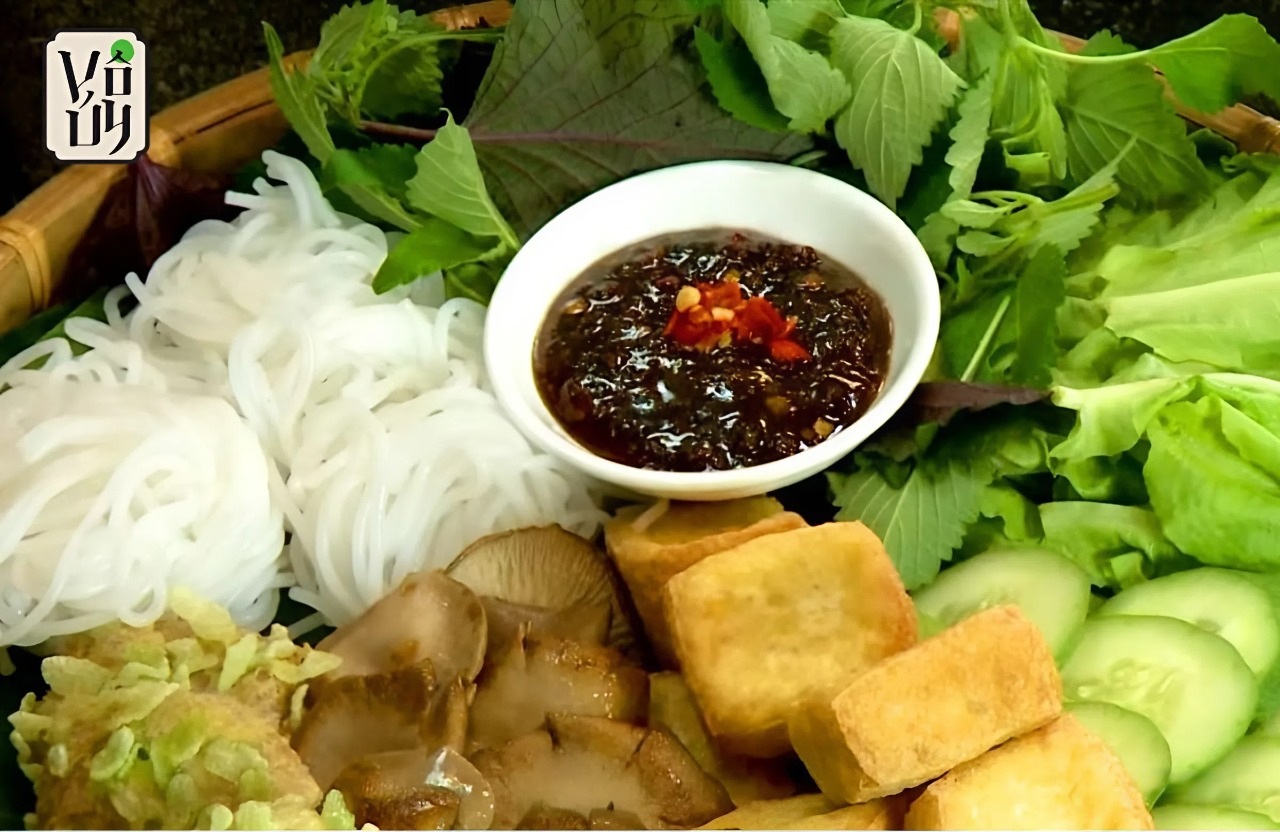
Line a serving tray with a clean banana leaf or use a large plate. Arrange the rice vermicelli, tofu, green rice patties, mushrooms, tofu skin, and vegetarian Vietnamese pork sausage in separate sections. Place the fresh herbs, cucumber, star fruit, and pickled baby eggplants in another section.
Do not place freshly fried toppings directly on the vegetables, as their heat and oil can quickly cause the vegetables to soften.
Place the bowl of vegetarian shrimp paste dipping sauce in the center of the tray or beside it. A well-prepared platter should have balanced colors, hot and crispy toppings, fresh vegetables, and soft noodles that have not dried out.
How to Make Delicious Vegetarian Bún Đậu Mắm Tôm at Home
Two Ways to Make Vegetarian Shrimp Paste Dipping Sauce for Bún Đậu
The dipping sauce determines much of the overall flavor of bún đậu. You can choose a quick recipe using fermented tofu or make your own sauce base with mushrooms and fermented whole soybean paste.
How to Make Quick Vegetarian Shrimp Paste Dipping Sauce with Fermented Tofu
Place five cubes of white fermented tofu and one tablespoon of fermented whole soybean paste in a bowl, then mash them until smooth. Add 1½ tablespoons of sugar and one tablespoon of lime or calamansi juice.
Add 1–2 tablespoons of warm water and stir until the mixture reaches a moderately thick consistency. Finally, add chopped chili and one tablespoon of hot cooking oil to give the dipping sauce a fragrant aroma and richer flavor.
Taste the sauce each time you add an ingredient. If the fermented tofu is very salty, reduce the amount used or add a little more water and sugar.
How to Make Vegetarian Shrimp Paste with Mushrooms and Fermented Soybean Paste
Prepare 100g of straw mushrooms, four cubes of white fermented tofu, two tablespoons of fermented whole soybean paste, and approximately 100ml of water.
Clean and finely chop the straw mushrooms, then stir-fry them over medium heat until cooked. Place the mushrooms, fermented tofu, soybean paste, and some of the water in a blender.
Pour the mixture into a saucepan and cook over low heat for approximately 5–7 minutes. Stir continuously to prevent the sauce from burning on the bottom. Once the mixture has thickened and developed a fragrant aroma, turn off the heat and allow it to cool.
This mixture serves as the sauce base. When ready to use, take the required amount and add sugar, lime juice, chili, and hot oil according to your preference.
How to Adjust Vegetarian Shrimp Paste Dipping Sauce
If the dipping sauce is too salty, add warm water, sugar, and a small amount of lime juice. Add each ingredient gradually to prevent the sauce from becoming too thin. If it is too sweet, add more sauce base and a little lime juice. If the sourness is too strong, add sugar or more sauce base.
If the dipping sauce is too thick, dilute it with warm water. If it is too thin, add mashed fermented tofu or gently heat the sauce base until it reaches the desired consistency.
What Vegetables and Herbs Go Well with Vegetarian Bún Đậu Mắm Tôm?
Vegetarian bún đậu mắm tôm is commonly served with aromatic herbs. Perilla and Vietnamese balm create a flavor similar to traditional bún đậu. Fish mint adds a refreshing taste, while Thai basil and coriander make the dish more fragrant.
You can prepare the following vegetables and herbs:
- Perilla
- Vietnamese balm
- Fish mint
- Thai basil
- Coriander
- Lettuce
- Cucumber
Sour star fruit, green mango, and pickled baby eggplants also help balance the platter. Their sour flavor and crisp texture reduce the richness of the fried toppings.
For a simple version, you only need rice vermicelli, tofu, mushrooms, cucumber, and fresh herbs. For a complete platter, you can add vegetarian green rice patties, vegetarian Vietnamese pork sausage, tofu skin, plant-based ribs, or vegetarian spring rolls.
Tips for Making Delicious Vegetarian Bún Đậu Mắm Tôm
Each component of the platter requires a different preparation method. Pay close attention to the oil temperature, the moisture in the ingredients, and when the platter is assembled.
Keep the Tofu Crispy Outside and Soft Inside
Pat the tofu dry before frying and only place it in the pan once the oil is hot. If the temperature is too low, the tofu will absorb excessive oil. If it is too high, the exterior may burn before the inside becomes hot.
Fry the tofu in small batches. After removing it from the pan, place the pieces on a wire rack instead of stacking them. Steam trapped between stacked pieces can quickly soften their crispy exterior.
Prevent the Vegetarian Green Rice Patties from Breaking Apart
The taro and tofu must be thoroughly drained before mixing. If the mixture is too wet, the patties will be difficult to shape. However, adding too much starch will make them overly firm.
Gently press the flattened green rice flakes onto both sides of each patty and let them rest before frying. Once the patties are in the pan, wait until one side turns golden before flipping them.
Keep the Vegetables Fresh and the Toppings Hot
Prepare the vegetables first and fry the toppings last. Allow freshly fried toppings to drain for a few minutes before arranging them on the platter. Keep the vegetables and fried foods in separate sections.
The noodles, vegetables, and dipping sauce can be prepared in advance. However, the tofu and vegetarian patties or sausages should be heated immediately before serving.
How Many Calories Are in Vegetarian Bún Đậu Mắm Tôm?
The calorie content of vegetarian bún đậu mắm tôm depends on the serving size, number of toppings, and cooking methods. One serving containing rice vermicelli, fried tofu, green rice patties, mushrooms, vegetables, and dipping sauce may provide approximately 600–800 calories. The actual amount can vary considerably depending on how much oil the food absorbs and the types of processed vegetarian products used.
Rice vermicelli provides most of the carbohydrates in the dish. Tofu, mushrooms, and vegetarian patties or sausages add plant-based protein, although processed toppings may contain large amounts of starch, oil, or salt. Fried tofu, fried tofu skin, and green rice patties also increase the dish’s total calorie content.
To reduce the amount of oil in the dish, you can:
- Pan-sear the toppings or use an air fryer.
- Add more mushrooms and vegetables.
- Reduce the number of processed vegetarian toppings.
- Use a moderate amount of dipping sauce.
- Reduce the sugar and hot oil in the dipping sauce.
- Avoid reusing frying oil several times.
Vegetarian bún đậu is not necessarily a low-calorie dish. People managing their weight should still pay attention to portion sizes and their total daily calorie intake.
How Many Calories Are in Vegetarian Bún Đậu Mắm Tôm?
How to Store Vegetarian Bún Đậu and Vegetarian Shrimp Paste
Store the noodles, vegetables, toppings, and dipping sauce separately. Keeping all the ingredients together will quickly soften the vegetables, dry out the noodles, and cause fried foods to lose their crispness.
Allow the cooked tofu, mushrooms, and vegetarian patties or sausages to cool before placing them in airtight containers. When serving them again, reheat them in a frying pan or air fryer. Do not reheat the toppings together with the vegetables and noodles.
Vegetarian shrimp paste dipping sauce containing lime juice should be consumed soon after preparation to preserve its best flavor. Transfer the sauce base made from mushrooms, fermented tofu, and soybean paste to a clean jar, seal it tightly, and refrigerate it. Discard the sauce if it develops an unusual smell, mold, or abnormal discoloration.
Frequently Asked Questions About Vegetarian Bún Đậu Mắm Tôm
Is Vegetarian Shrimp Paste Made from Shrimp?
Vegetarian shrimp paste does not contain shrimp. This dipping sauce is usually made with fermented tofu, fermented whole soybean paste, fermented soybeans, mushrooms, or vegetarian soybean sauce.
What Can Be Used Instead of Vegetarian Soybean Sauce?
You can combine white fermented tofu with fermented whole soybean paste, sugar, lime, chili, and hot oil. This recipe provides the richness, saltiness, and fermented aroma needed to complement vegetarian bún đậu.
Can Vegetarian Bún Đậu Be Made Without Green Rice Patties?
You can omit the green rice patties and use tofu, mushrooms, tofu skin, or plant-based ribs instead. The platter will still be flavorful if the toppings are properly seasoned and cooked.
Can I Use an Air Fryer?
You can use an air fryer to heat tofu, green rice patties, tofu skin, and plant-based ribs. Brush a thin layer of oil over their surfaces to prevent the toppings from becoming dry.
Are Vegetarian Shrimp Paste and Vegetarian Soybean Sauce the Same?
The two names may be used interchangeably in some recipes, but the ingredients are not necessarily identical. Vegetarian soybean sauce is typically made from fermented soybeans. Vegetarian shrimp paste may be prepared with soybean sauce, fermented tofu, soybean paste, or mushrooms to imitate the flavor of traditional shrimp paste.
Conclusion
Making vegetarian bún đậu mắm tôm at home is an enjoyable way to add variety to your family’s meals. You can choose different toppings, adjust the dipping sauce, and reduce the amount of oil according to your preferences.
If you would rather relax than spend time in the kitchen, visit Vô Úy Vegetarian Restaurant to discover a wider selection of carefully prepared vegetarian dishes. The restaurant’s peaceful atmosphere is ideal for meals with family, friends, or colleagues. Vô Úy is located at 47 Street No. 3, CityLand Park Hills, Go Vap District, Ho Chi Minh City. A complete vegetarian dining experience here focuses not only on flavor but also on providing diners with a sense of comfort and tranquility.